What Wood Stove Cleaning in Flower Mound Includes
A wood stove is a closed box that burns slow and hot, and it leaves creosote in places a fireplace never does. Flower Mound Chimney Sweep Professionals cleans wood stoves in Flower Mound from the ash pan to the cap, and checks the parts that keep the stove drafting.
A stove cleaning visit has six steps:
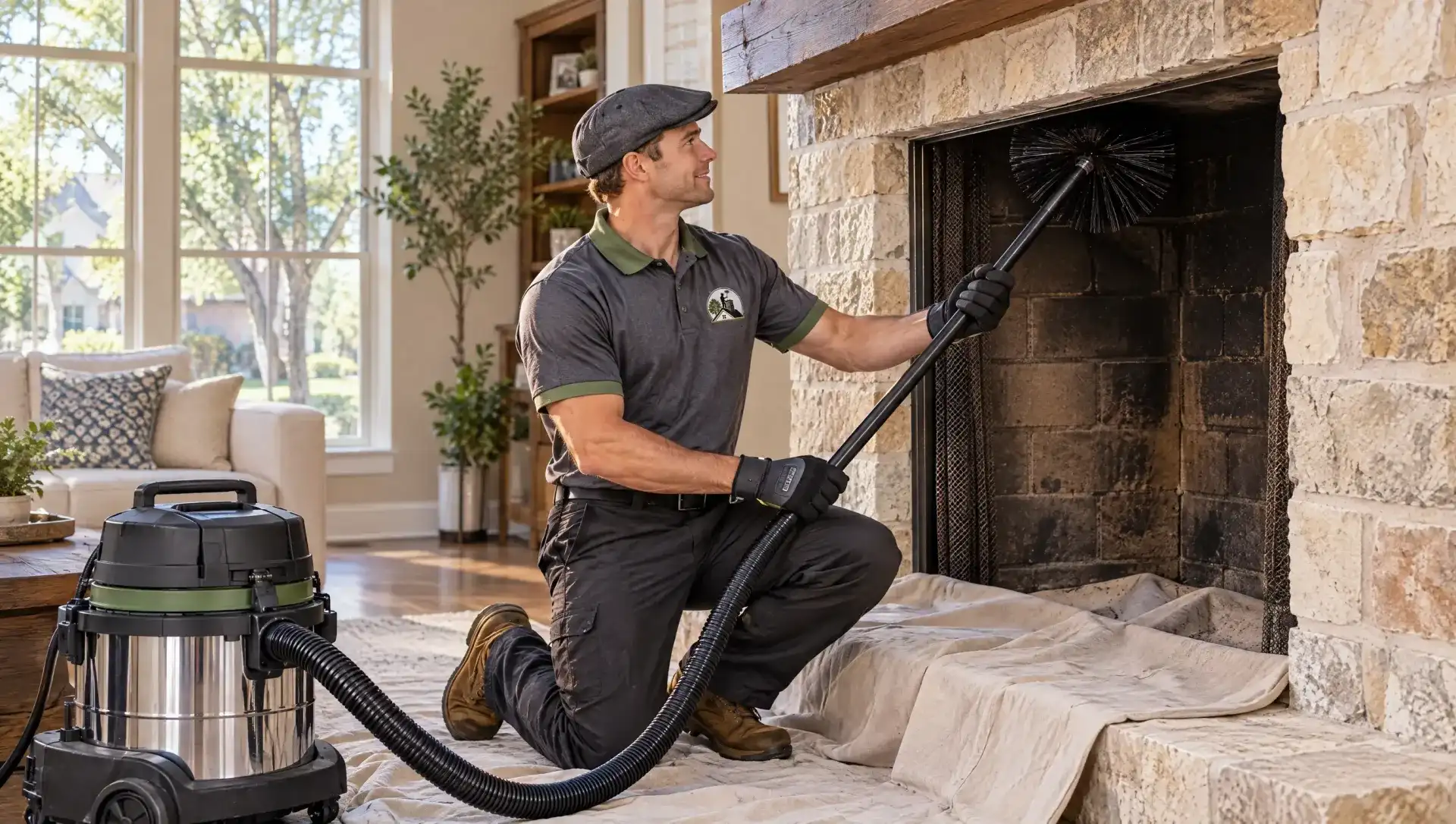
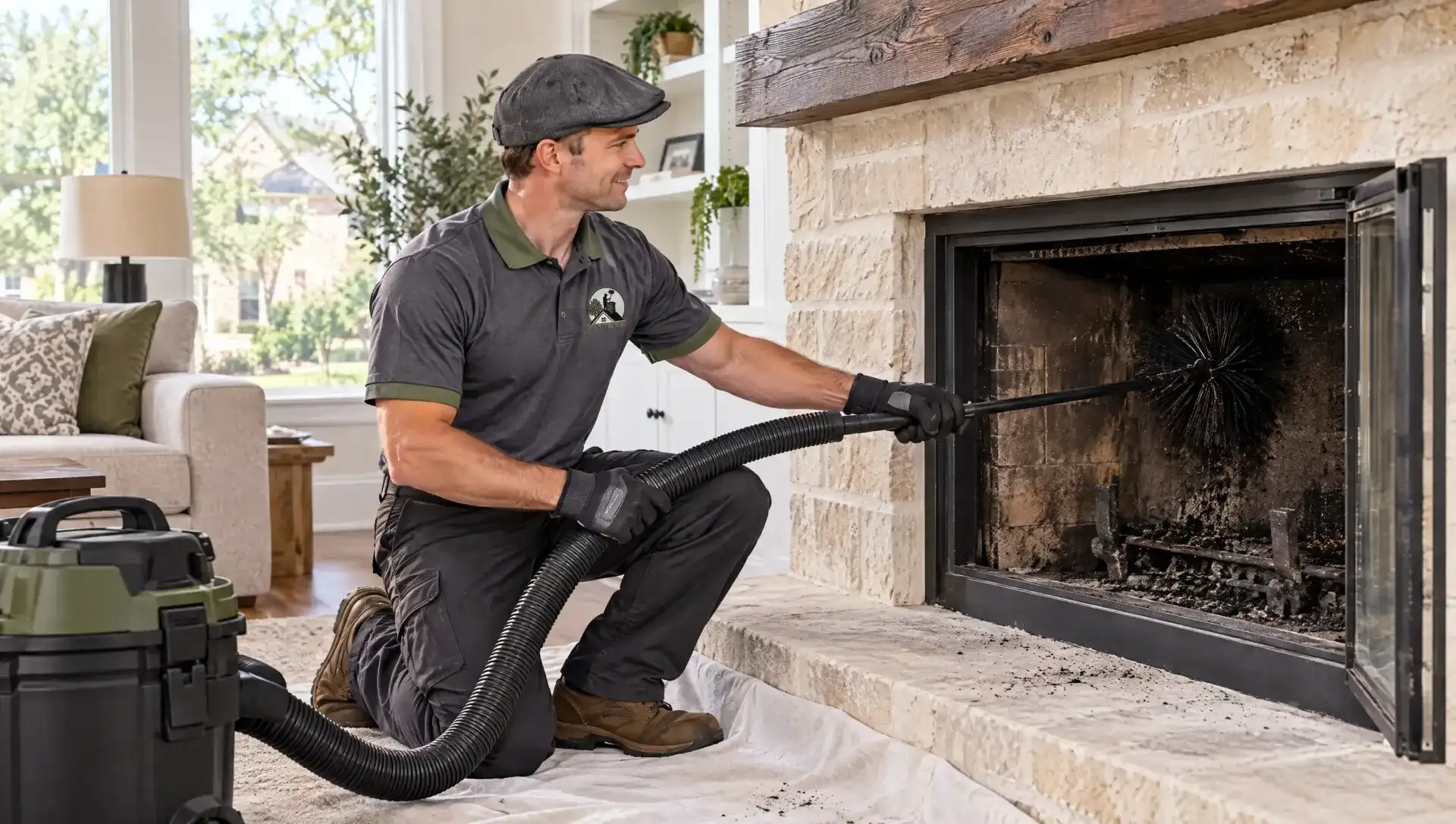
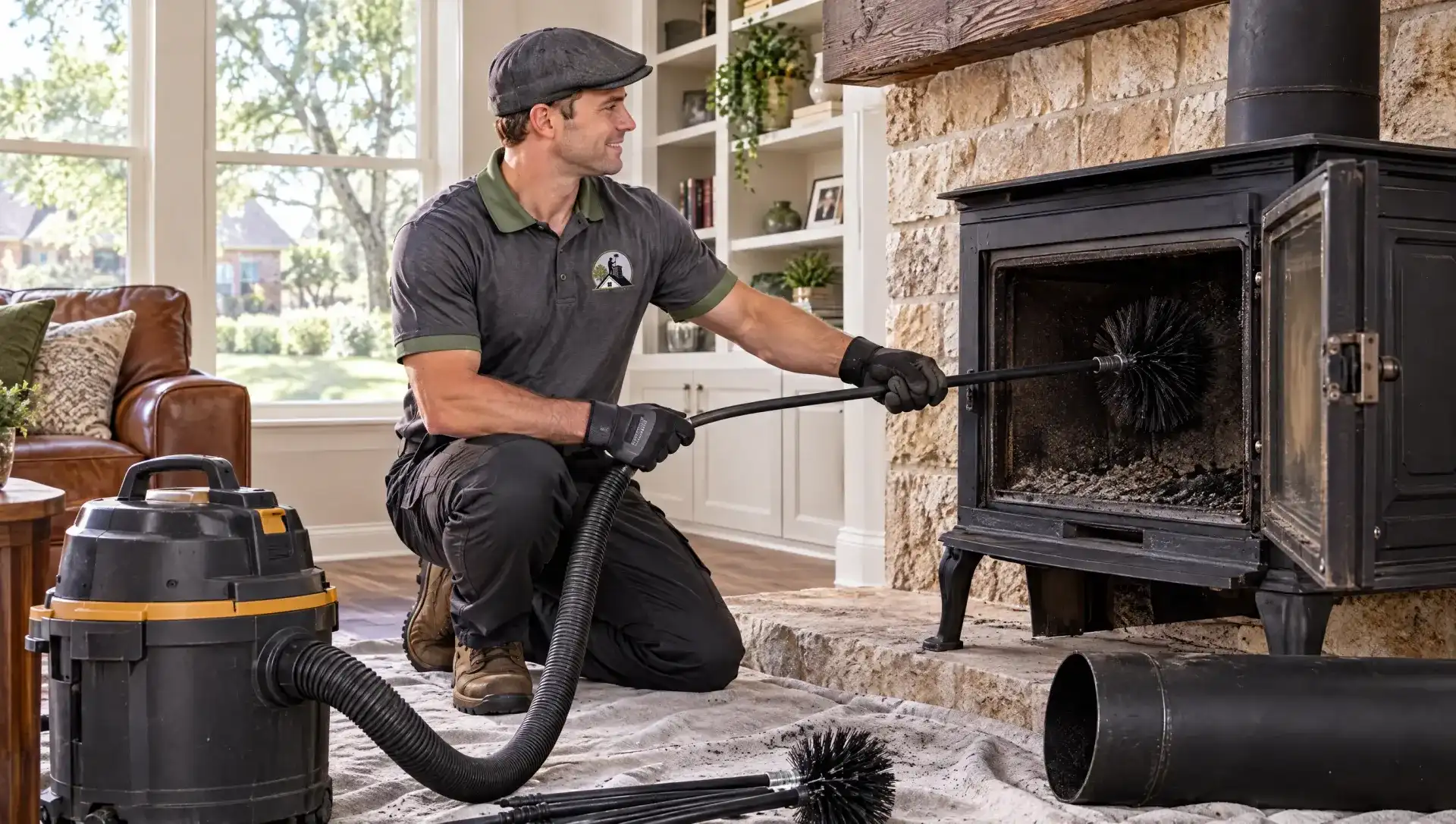
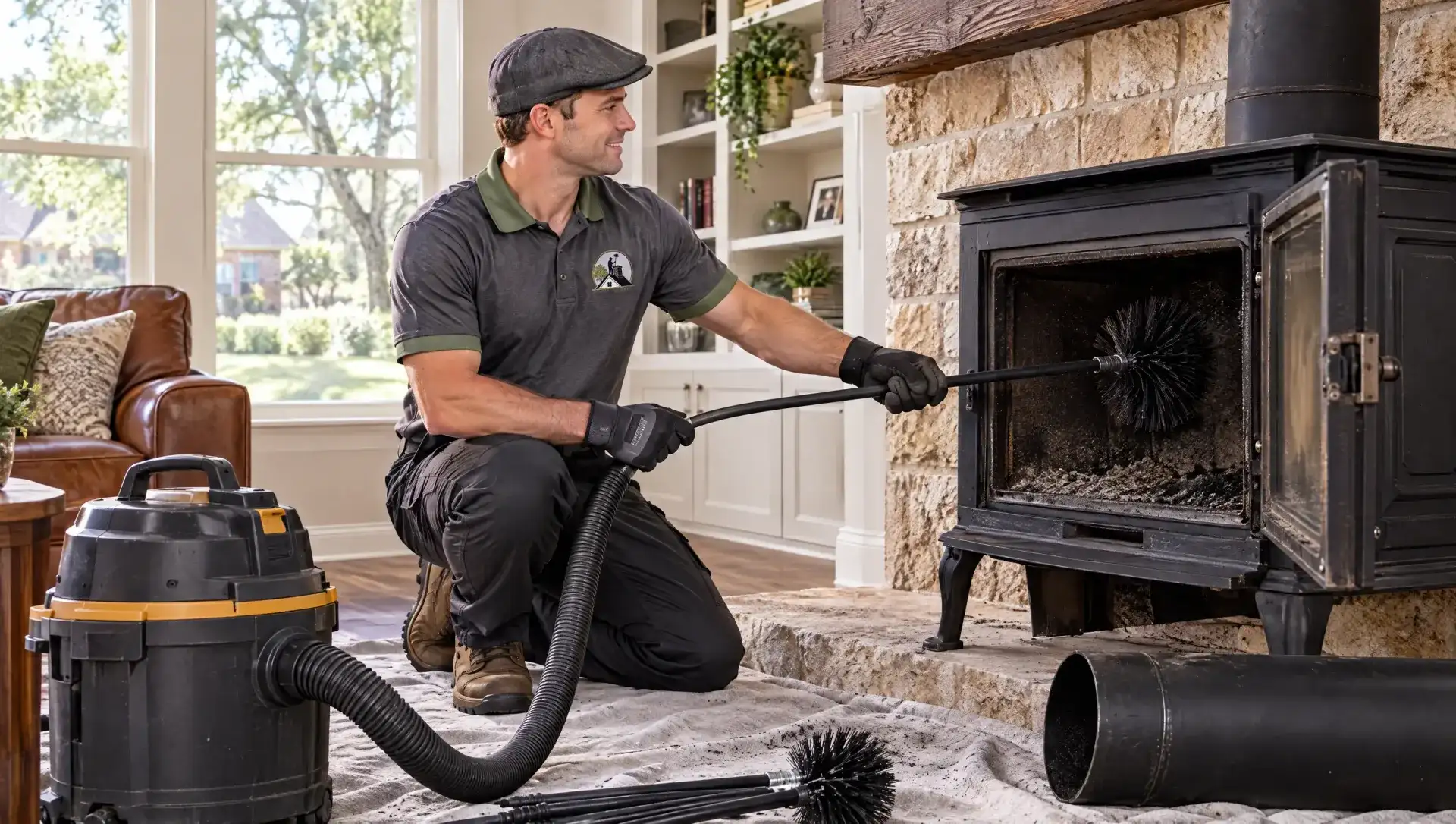
- Protect the room. Drop cloths go down from the door to the stove. The HEPA vacuum runs the whole time.
- Clean the stove. Ash comes out of the firebox and ash pan. The baffle plate or tubes come out or lift so the creosote on top of them can be brushed and vacuumed. The firebrick and air inlets are cleared.
- Clean the stovepipe. The single-wall or double-wall pipe between the stove and the ceiling is taken apart at the joints, brushed, vacuumed and put back with the joints sealed and screwed.
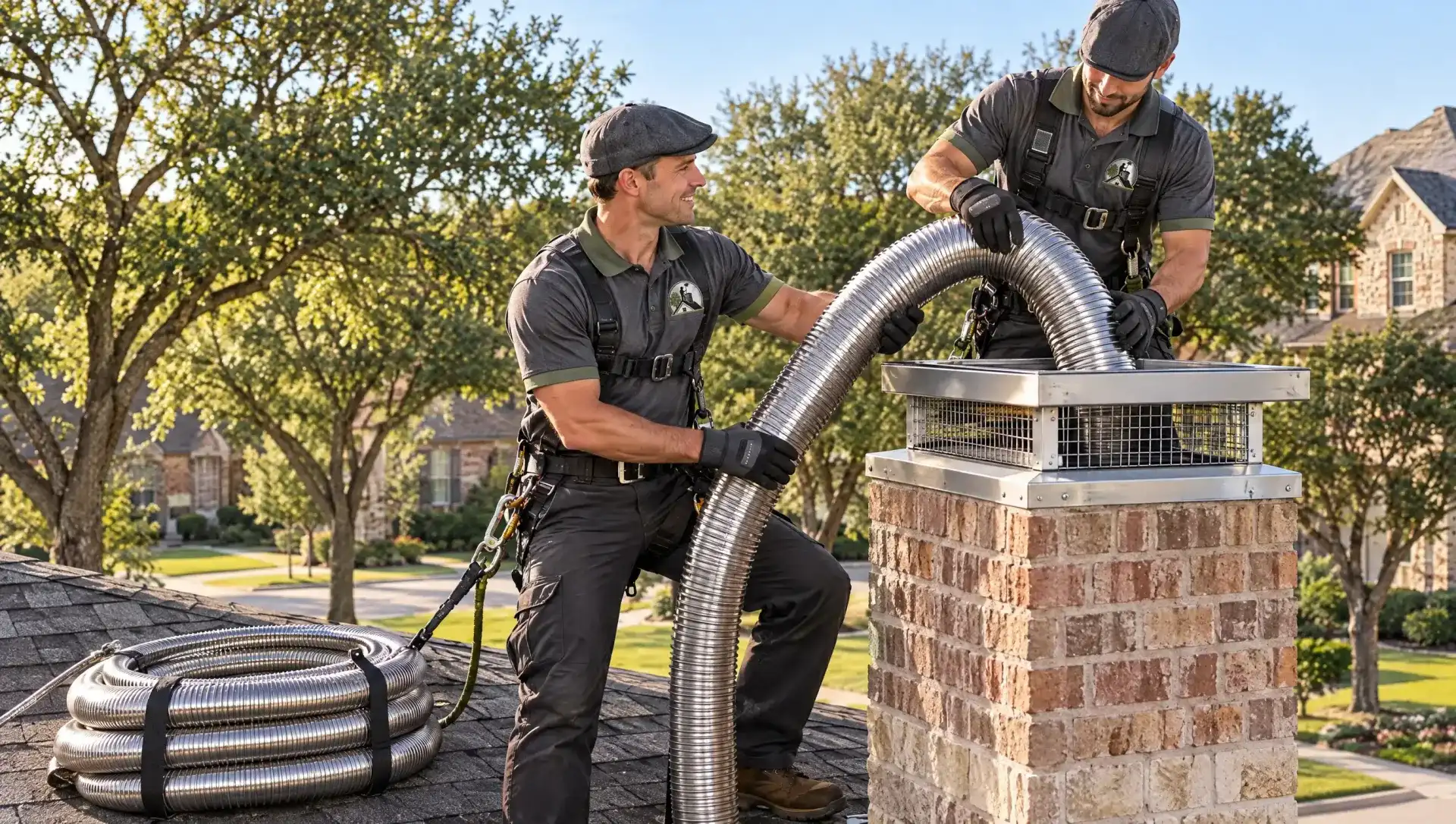
- Sweep the chimney. Rotary rods sized to the liner go up from the stove or down from the roof. The cap and the top of the liner are cleaned on the roof.
- Check the parts. We check the door gasket with a dollar bill test, the glass and its gasket, the catalytic combustor if the stove has one, the damper, and the clearance between the pipe and the ceiling and walls.
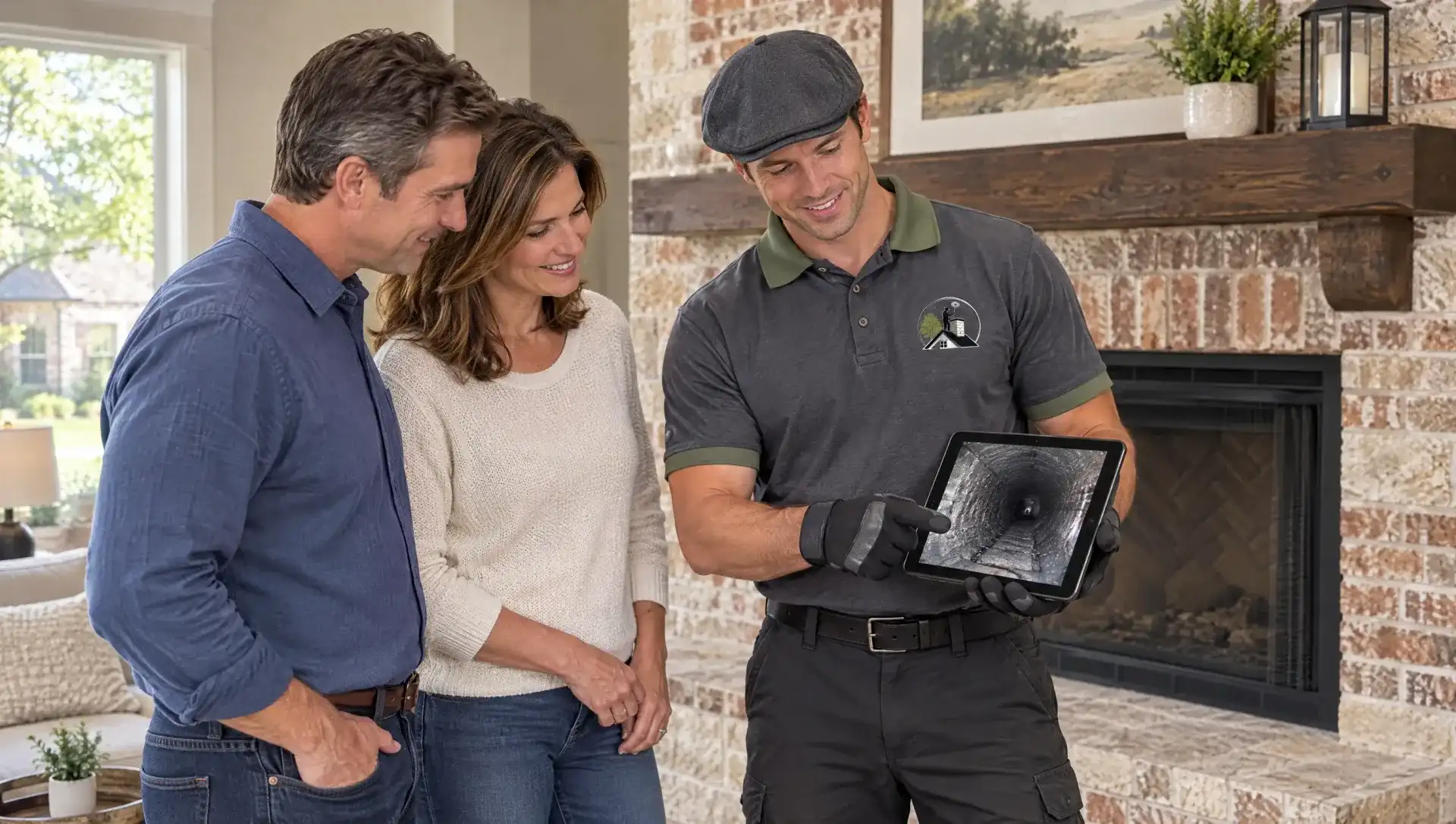
- Show you. A camera goes up the liner, and you get before and after photos with a written note of anything that needs attention.
A stove cleaning with the inspection takes about 90 minutes.
Why Wood Stoves Build Creosote Faster
Creosote is unburned wood smoke that condenses on a cool surface. A stove makes more of it than an open fireplace because of how people run it:
- Low, slow burns. Turning the air down for an overnight burn makes a cool, smoky fire. That smoke cools in the pipe and sticks.
- Wet wood. Wood that was cut this year or stored uncovered through a Flower Mound spring has too much water. The EPA’s Burn Wise program says to burn only dry, seasoned wood, split and stored at least six months, and that a moisture meter should read under 20 percent.
- A cool pipe. A long run of single-wall pipe, or a chimney on an outside wall, cools the smoke before it leaves.
- Blocked baffle. Once ash piles on the baffle, the smoke slows down, and slow smoke leaves more creosote.
- Oversized flue. A stove vented into an old open fireplace flue without a liner fills a flue that is far too big, so the smoke cools and condenses on the way up.
The Chimney Safety Institute of America lists creosote as the leading cause of chimney fires, and a stove pipe packed with creosote can reach fire temperature in minutes.
Signs You Need Wood Stove Cleaning
- Smoke puffs into the room when you open the stove door
- The fire is hard to start or dies back when the door is closed
- The glass turns black within a day or two
- A tar or hot-metal smell when the stove is running
- Flaky, crusty or shiny black buildup inside the stovepipe
- Creosote dripping from a pipe joint or staining the wall behind the stove
- A roar or ticking sound in the pipe during a fire, which can be a small chimney fire
- It has been a year since the last cleaning
A chimney fire in a stove pipe sounds like a low roar or a freight train. If you hear it, close the stove air all the way, get everyone out and call 911. Then call us before the next fire.
Stove Parts We Check
| Part | What goes wrong | What it leads to |
|---|---|---|
| Door gasket | Flattens and leaks air | Fire burns too hot, runs away, cannot be turned down |
| Glass and gasket | Cracks, blackens, leaks | Air leak, broken glass under load |
| Baffle | Warped, cracked, buried in ash | Smoke spills at the door, poor burn |
| Catalytic combustor | Plugged or crumbling | Stove smokes, loses efficiency, combustor replaced |
| Firebrick | Cracked or missing | Heat reaches the steel, stove body warps |
| Stovepipe joints | Loose, rusted, creosote dripping | Smoke and carbon monoxide leak into the room |
| Clearances | Furniture or trim too close to the pipe | Fire risk, pipe shields or a move needed |
| Chimney cap and liner | Creosote at the top, missing cap | Rain in the stove, draft loss, animals |
Chimney Sweep and Creosote Removal
A stove and its chimney get cleaned on the same visit as a chimney sweep, using the same rotary tools. When the camera finds glazed, third-stage creosote that a brush will not move, our creosote removal page explains the chemical treatment and rotary chains that take it off the liner. Our fireplace cleaning page covers open fireplaces and gas units if you have both in the house.
Wood Stove Installation and Chimney Relining
A stove that smokes even when it is clean is usually vented wrong: an old open flue with no liner, a chimney that is too short, or too many elbows in the pipe. Our wood stove installation page covers clearances, hearth pads and the 6-inch stainless liner a stove needs, and the chimney relining page explains how that liner goes into an existing chimney. The Level 1 chimney inspection included with every cleaning tells you which one your stove needs.
Book Wood Stove Cleaning in Flower Mound
Flower Mound Chimney Sweep Professionals is veteran-owned and based on Long Prairie Rd in Flower Mound 75028. We clean wood stoves in Flower Mound, Lewisville, Southlake, Colleyville, Keller, Fort Worth and Collin County, 7 days a week from 7 AM to 8 PM. Call (817) 518-6131 or send the form on this page. You get a firm price before we start and photos of the stove and liner before and after. See what customers say on our reviews page.