Creosote Removal in Flower Mound: Which Stage Do You Have?
Not all creosote is the same, and the stage decides the tool. Flower Mound Chimney Sweep Professionals puts a camera up the flue before quoting creosote removal, because stage 1 comes off in a standard sweep and stage 3 does not.
| Stage | What it looks like | How it forms | How we remove it |
|---|---|---|---|
| Stage 1 | Dusty, flaky black soot | Normal burning, hot fires | Standard sweep with a rotary brush |
| Stage 2 | Hard, crunchy flakes and tar, like black cornflakes | Cooler fires, some wet wood | Rotary brush, then chains or whips on the stubborn spots |
| Stage 3 (glazed) | Shiny, hard black glaze, like tar poured down the walls | Slow smoldering fires, wet wood, a cold flue | Chemical modifier to make it brittle, then rotary chains, often two visits |
Stage 3 is the one to worry about. It is dense, it holds the most fuel per inch, and it ignites at a lower temperature than the wood in the firebox. The Chimney Safety Institute of America calls for sweeping as soon as any glaze is present, no matter how thin the rest of the buildup is.
Why Flower Mound Chimneys Build Creosote Fast
Creosote forms when smoke cools below about 250 degrees before it leaves the flue. Everything about how fireplaces are used here pushes smoke toward that temperature:
- Short, mild-weather fires. A one-hour fire on a 50-degree December evening never heats the flue. Cool walls condense smoke.
- Exterior chimneys. Most masonry chimneys in town are on an outside wall. The flue starts cold and stays cold on the north side of the house.
- Wet wood. Post oak and cedar elm cut this year and burned this winter is far above the 20 percent moisture the EPA Burn Wise program recommends. Wet wood makes cool, smoky fires.
- Damped-down fires. Closing the damper or glass doors to make a fire last starves it of air and doubles the smoke.
- Oversized flues. Older masonry chimneys with a flue too large for an insert or a gas log set let smoke linger and cool.
The U.S. Fire Administration counted about 32,200 home heating fires in one recent year and recommends having chimneys cleaned and inspected each year by a professional. Creosote is the fuel in most of the chimney fires in that count.
Signs You Need Creosote Removal
- Shiny or tar-like buildup visible above the damper with a flashlight
- Black flakes on the smoke shelf or firebox floor after a fire
- A strong smoky, tar smell indoors on humid summer days
- Smoke rolling back into the room while a fire burns
- Fires that are hard to light or burn lazy and dark
- A roaring, popping or whooshing sound during a fire, which can be creosote burning in the flue
- Creosote flakes on the roof or in the yard after a fire
The last two mean a chimney fire has already happened. Stop using the fireplace and book a Level 2 chimney inspection before the next one.
How We Remove Glazed Creosote
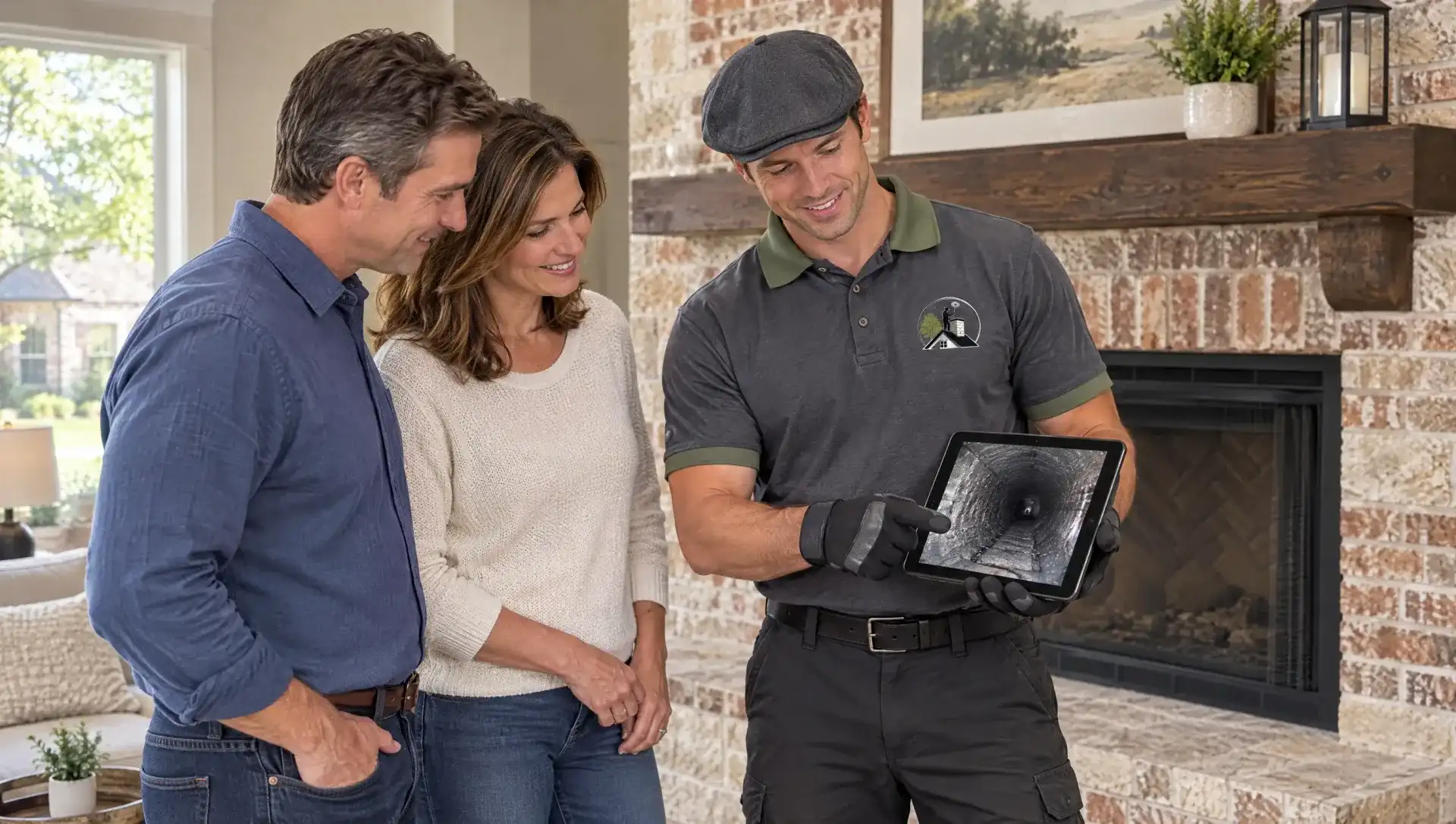
- Camera first. We scan the flue, smoke chamber and firebox to map where the glaze is and how thick it is. That decides the price.
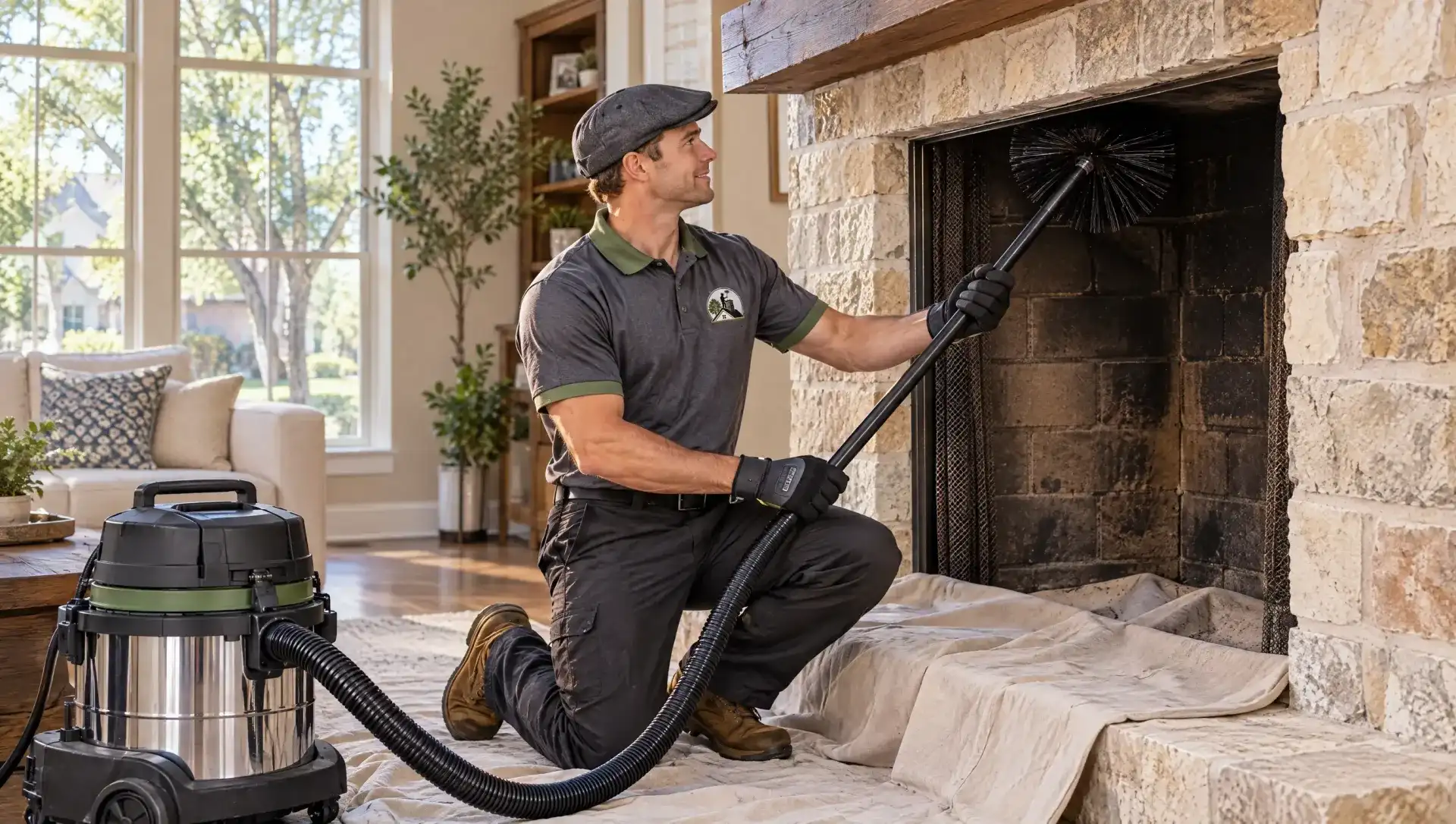
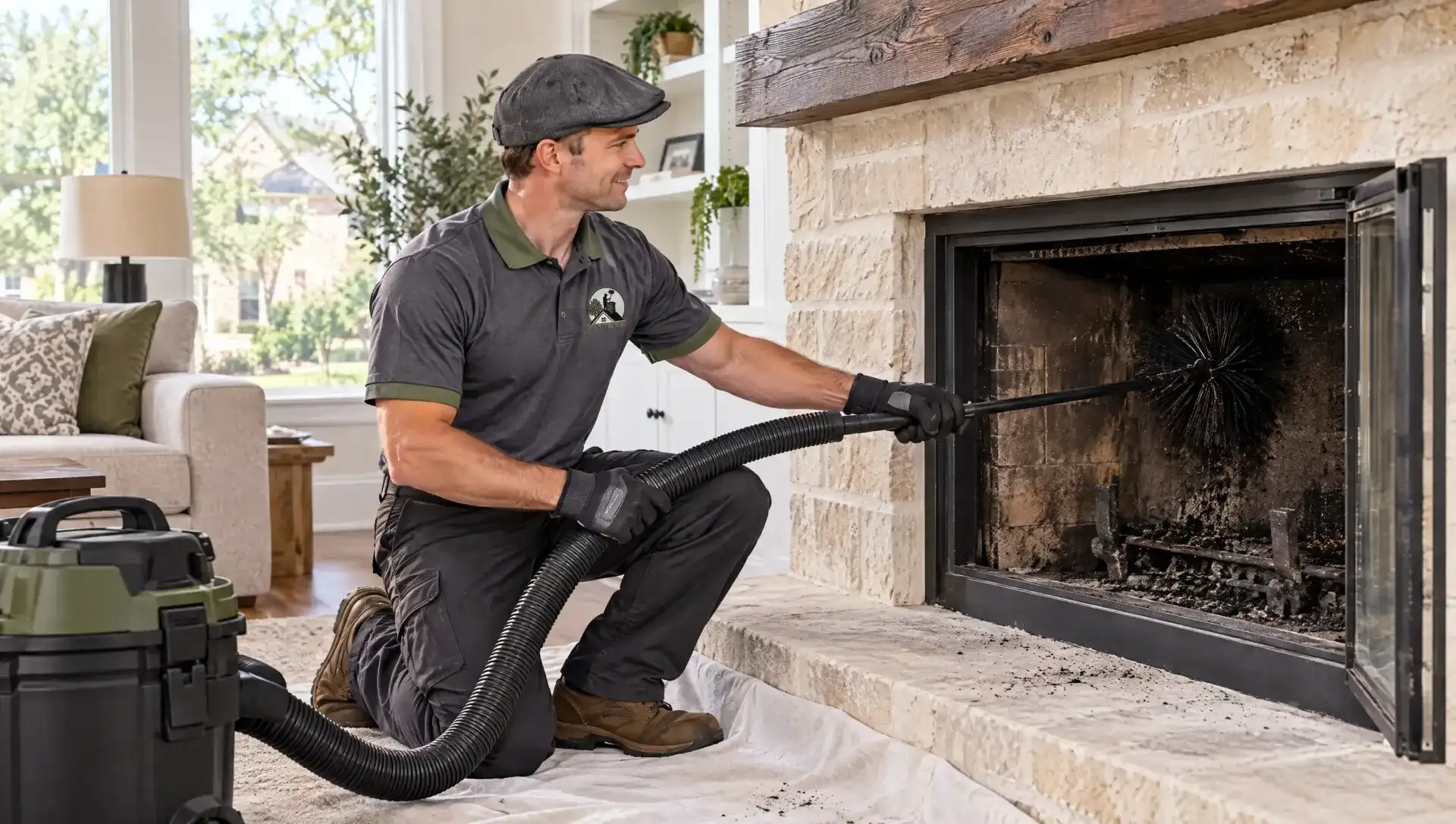
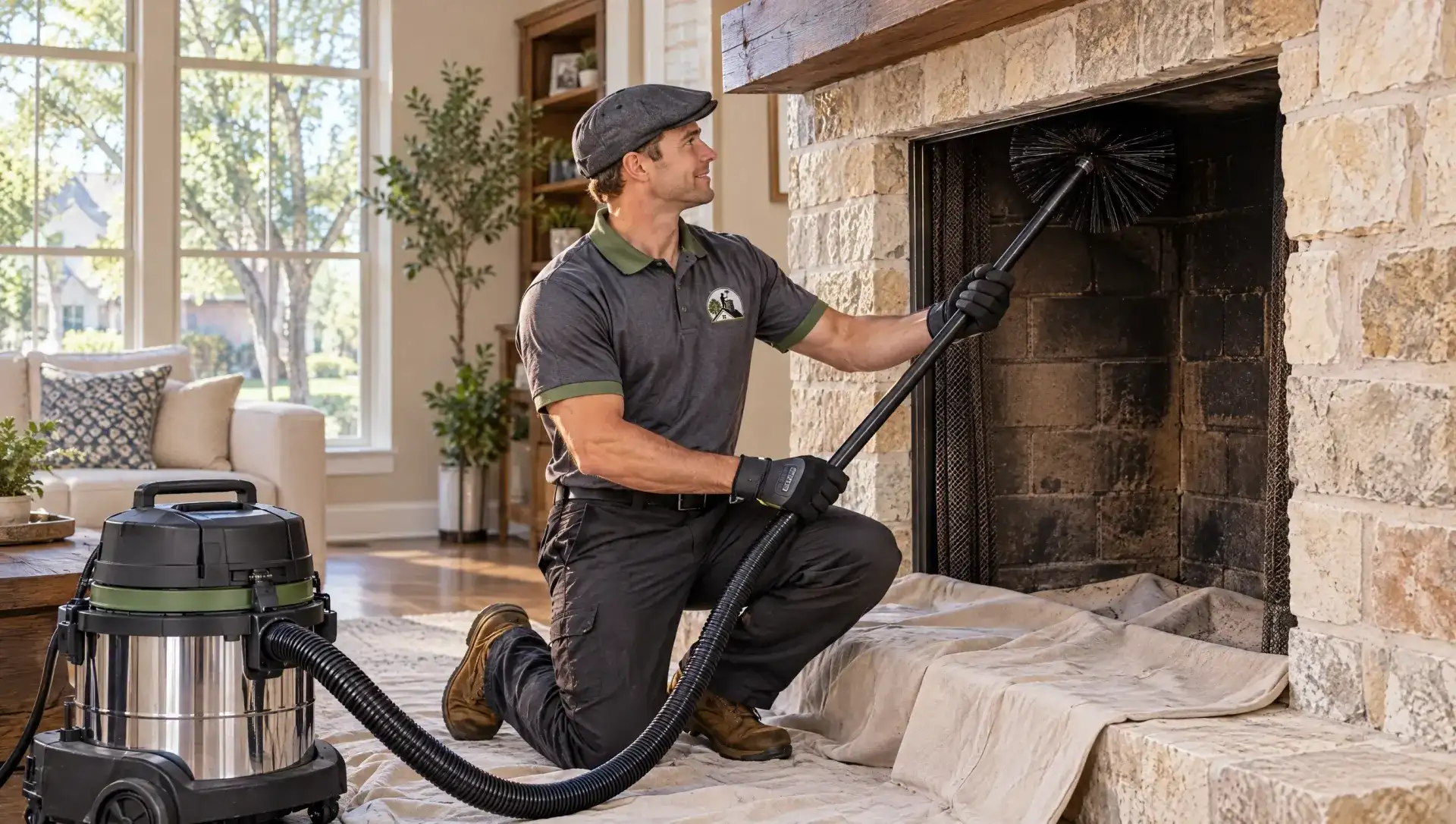
- Seal and protect. Drop cloths, a sealed opening and a HEPA vacuum running the whole time.
- Chemical treatment. A creosote modifier is applied to the glazed areas, by spray or by burning a treated product in the firebox over several fires, depending on the chimney. It changes the glaze from a hard shell to a brittle crust.
- Rotary chains or whips. On a flexible rod, the chains spin against the flue walls and knock the brittle creosote loose. Clay tile flues take a heavier head. Metal flues in factory-built fireplaces take a lighter one so the liner is not damaged.
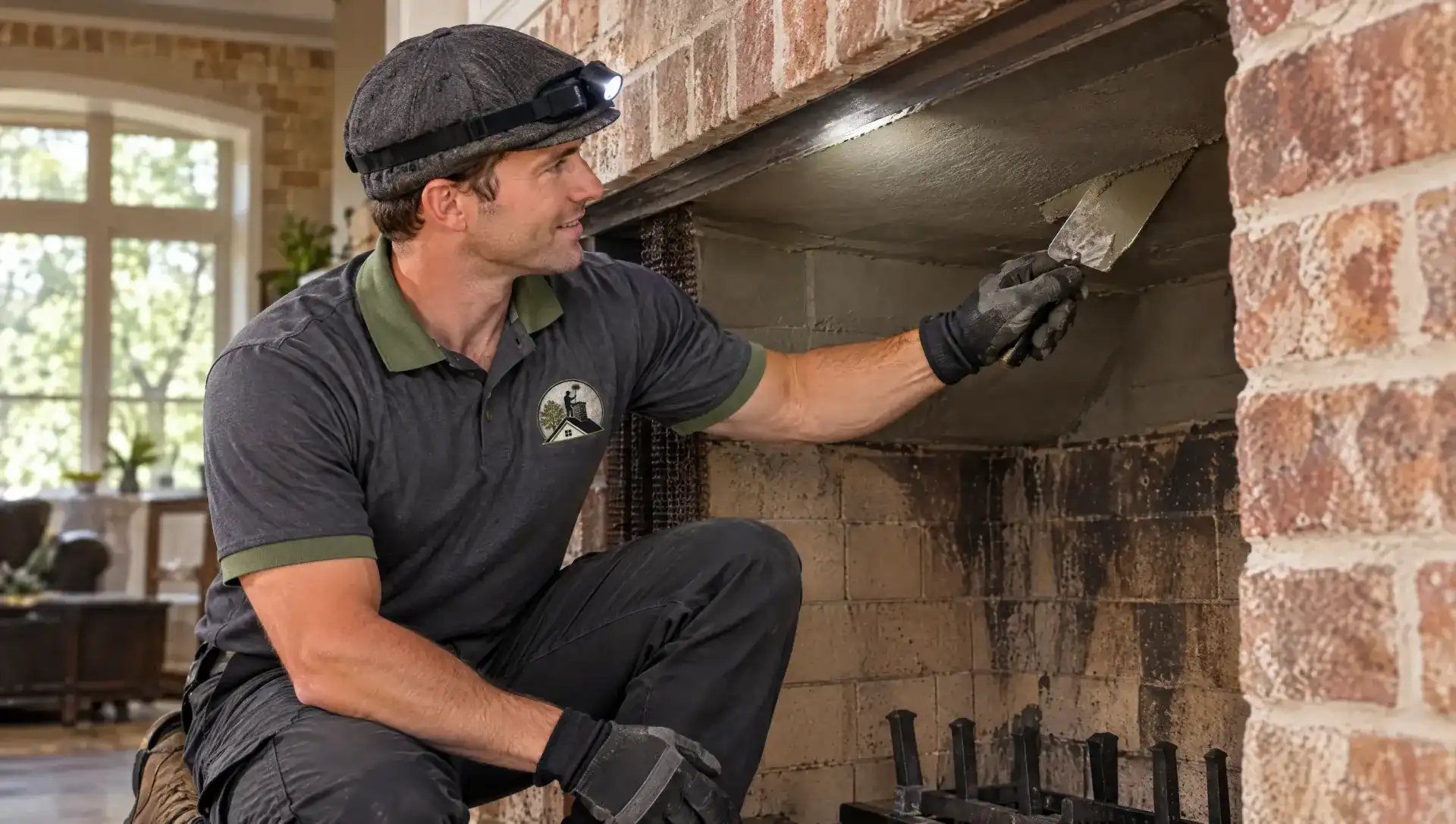
- Smoke chamber by hand. The sloped chamber walls and the smoke shelf are done with angled tools. See our smoke chamber cleaning page.
- Camera again. We show you the before and after on the same screen. If a second visit is needed for the thickest glaze, you know before you pay for it.
Chimney Sweep
Stage 1 and most stage 2 creosote come out during a regular chimney sweep in Flower Mound. The sweep includes a Level 1 inspection, so the camera check that identifies glaze is already part of the visit. Creosote removal is the next step when the sweep finds more than a brush can handle.
Chimney Cleaning
Creosote is not the only thing in a dirty flue. Our chimney cleaning page covers the full system, including leaves, nests, water paste on the smoke shelf and the firebox, and explains how gas fireplace flues are cleaned.
Chimney Relining
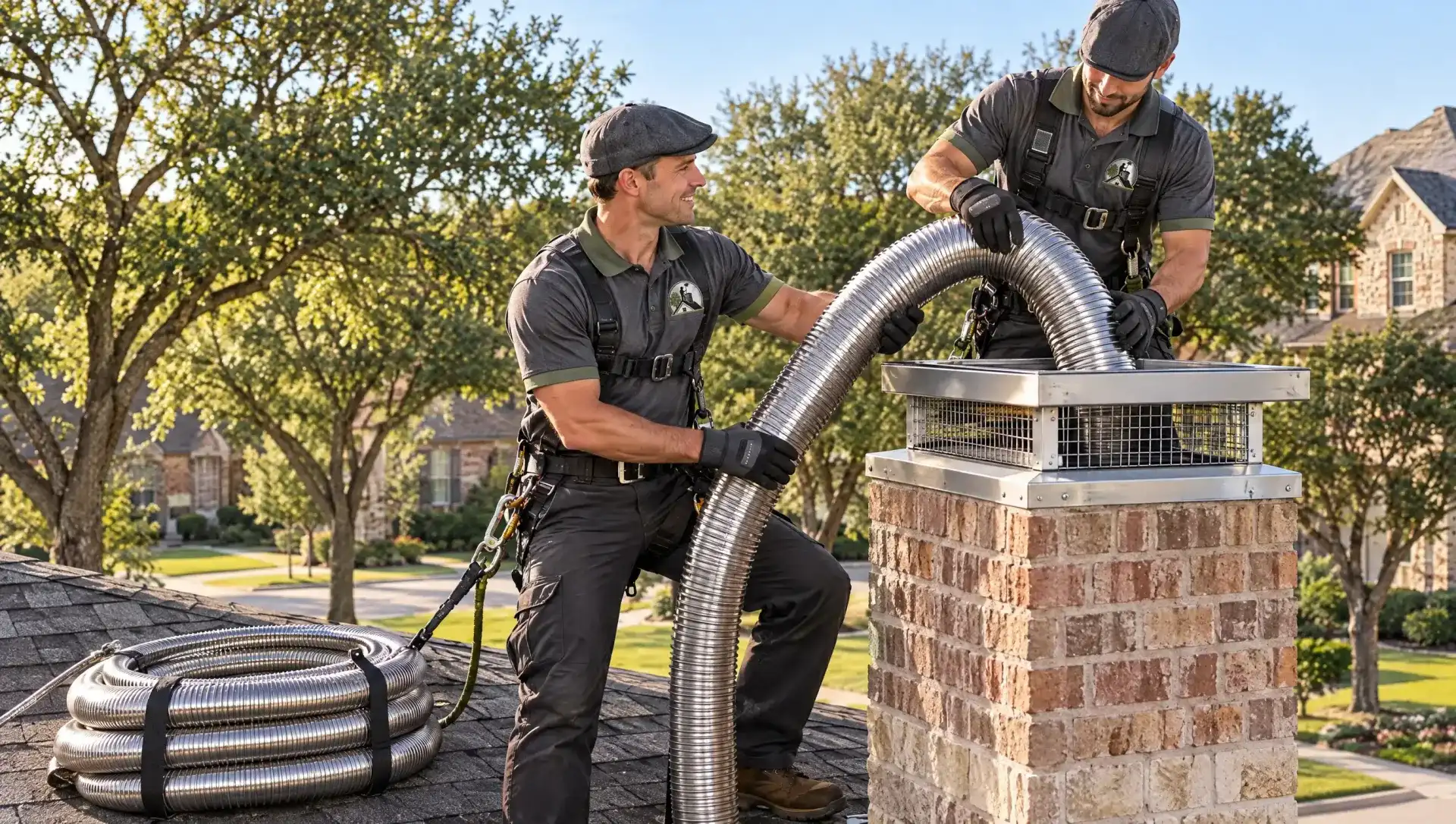
Heavy glaze often sits on a flue that is already damaged. Chimney fires crack clay tiles, and the gaps then collect even more creosote. When the post-cleaning camera scan shows cracked, shifted or missing tiles, a stainless steel liner is the standard fix. Our chimney relining page explains the options. We give you a free written estimate with the photos, and you decide.
How to Burn With Less Creosote
- Burn wood that has dried for at least six months and reads under 20 percent on a moisture meter.
- Build small, hot fires instead of large, smoldering ones.
- Leave the damper fully open while a fire is burning.
- Keep glass doors open during the fire so the fire gets air, and close them only once it is out.
- Have the flue inspected every year and cleaned at 1/8 inch of buildup.
Book Creosote Removal in Flower Mound
Flower Mound Chimney Sweep Professionals is veteran-owned and based on Long Prairie Rd in Flower Mound 75028. We remove creosote in Flower Mound, Lewisville, Southlake, Colleyville, Keller, Fort Worth and Collin County, 7 days a week from 7 AM to 8 PM. Call (817) 518-6131 or send the form on this page. You get a camera check first, a firm price before we start, and photos of the flue when we are done. See what customers say on our reviews page.