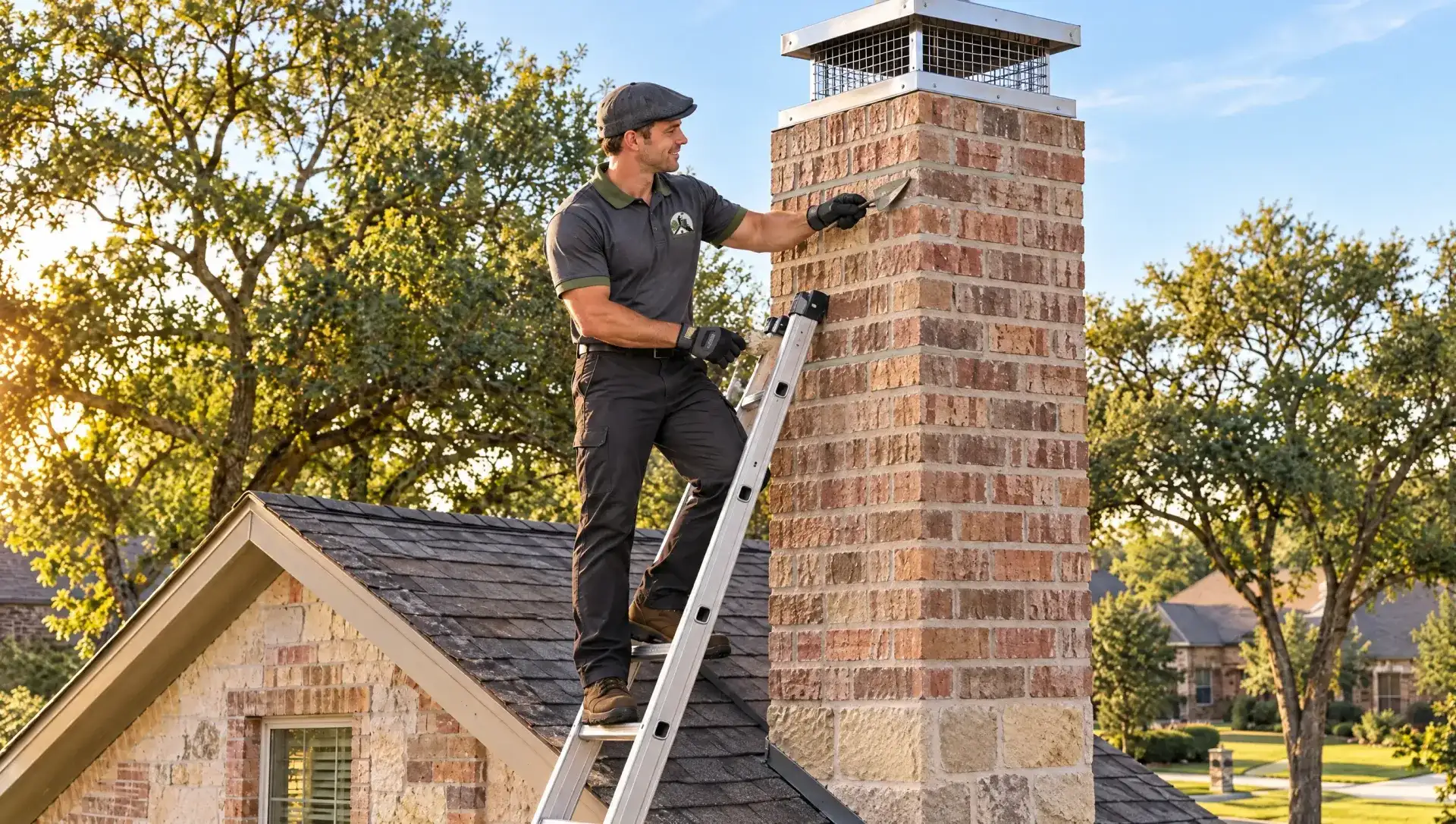
What Chimney Tuckpointing in Flower Mound Fixes
Mortar is the soft part of a brick chimney on purpose. It is meant to take the weather and the movement so the brick does not, and after 25 to 40 years in North Texas it has done its job and worn back. Chimney tuckpointing from Flower Mound Chimney Sweep Professionals removes that worn mortar and replaces it, on masonry chimneys in Flower Mound, Lewisville, Southlake and the older neighborhoods near Grapevine Lake and Lake Lewisville where full brick chimneys are common.
The reason to do it early is water. A joint that has worn back a quarter inch holds a small shelf of water in every rain. That water gets behind the brick, rusts the flashing, soaks the firebox wall and, in a freeze, pops the face off the brick. Tuckpointing closes those shelves. It is the repair that keeps a chimney from needing a rebuild.
Signs Your Chimney Needs Tuckpointing
- Mortar joints recessed behind the face of the brick
- Sandy or crumbling mortar you can scrape out with a key
- Sand or mortar crumbs on the roof or at the base of the chimney
- Stair-step cracks running along the joints
- White, chalky deposits (efflorescence) on the brick
- Brick faces flaking or popping off (spalling)
- Daylight through a joint seen from inside the attic
- Water stains inside with a sound crown, cap and flashing
Two or three of these together mean the joints are past the point where water repellent alone helps. If bricks are loose or the chimney leans, the problem has moved past tuckpointing and we quote a chimney rebuild instead.
How We Tuckpoint a Chimney
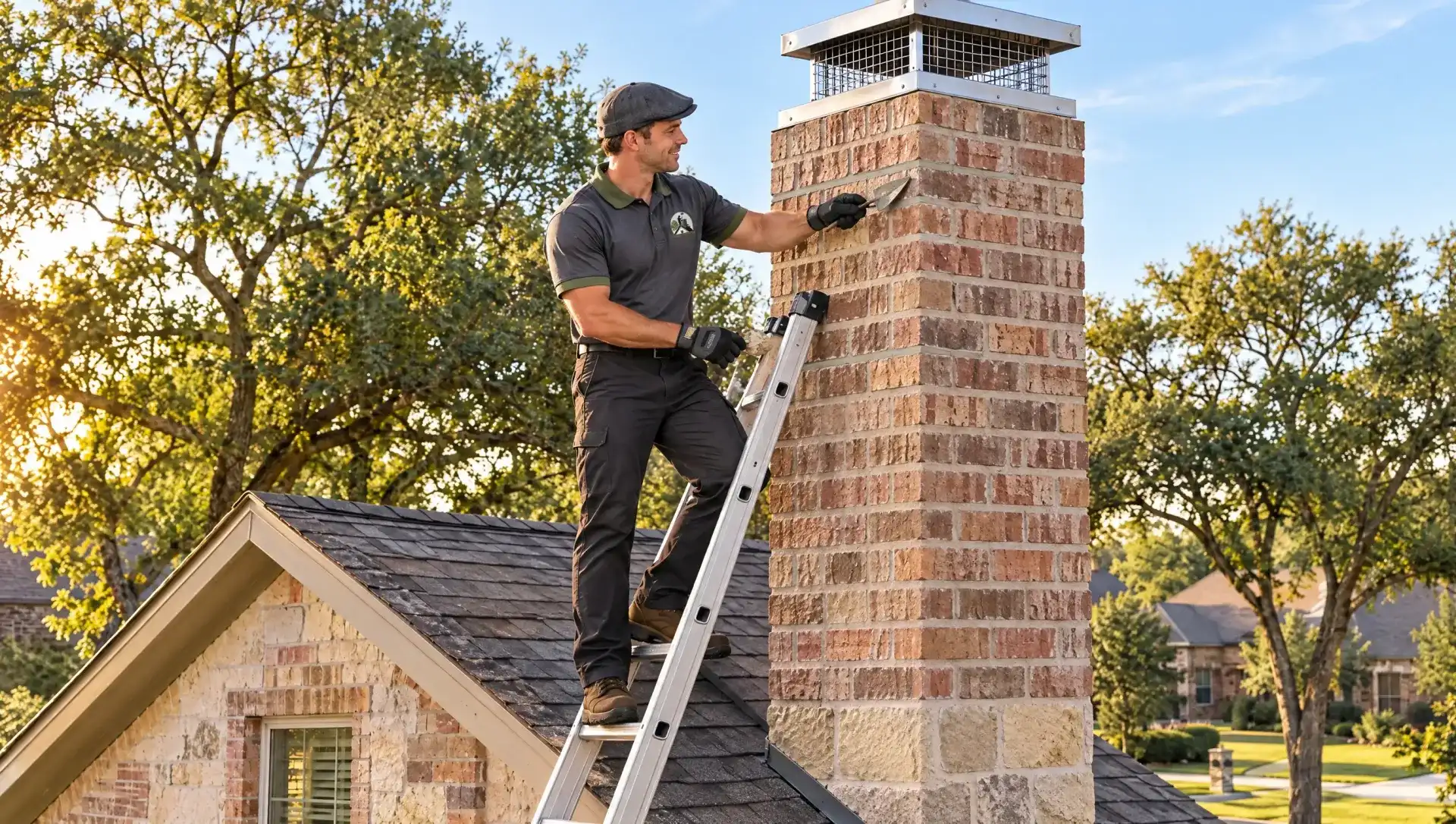
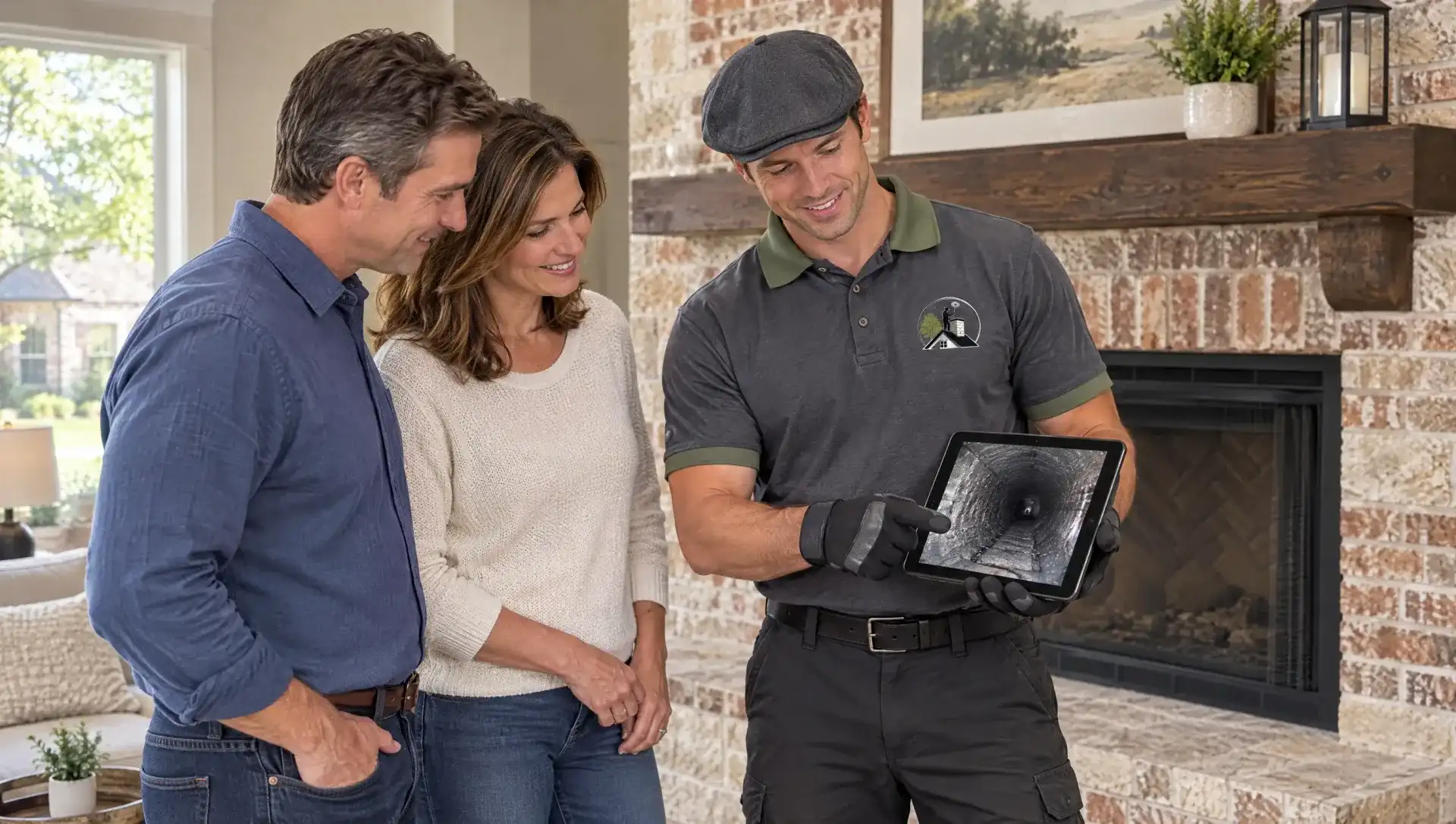
- Inspect. From the roof we photograph every face, probe the joints and note spalled bricks. A camera check of the flue shows whether water has reached the inside.
- Quote. Written price with the joints, bricks and any crown work as separate lines. Free.
- Cut out. Each failed joint is ground out to a depth of at least 3/4 inch, or two and a half times the joint width, whichever is more, without chipping the brick edges. Loose mortar is brushed and blown out.
- Match. We match the mortar type to the original, usually Type N for chimneys built from the 1970s on, and tint it to the existing color so the repair blends.
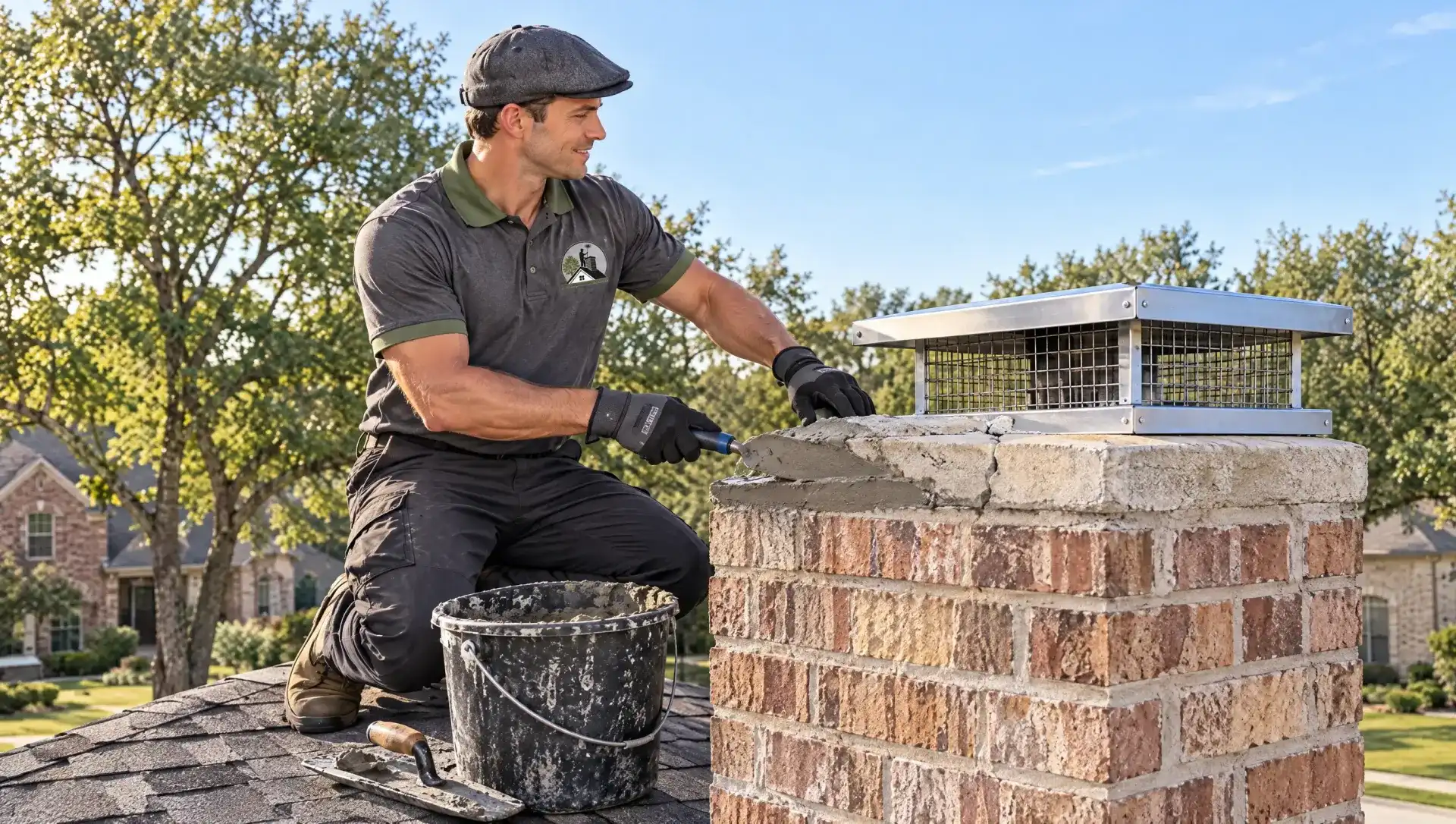
- Fill. The joint is dampened, then packed in layers of about 1/4 inch, each one firm before the next. Spalled bricks are cut out and replaced with matching brick.
- Tool and cure. Joints are tooled to the original profile, then kept damp while the mortar cures. No fires for several days if the firebox wall was touched.
- Finish. After photos, and a breathable water repellent once the mortar has cured if the estimate included it.
A typical chimney above the roofline takes one to two days. The National Park Service’s guidance on repointing mortar joints sets out the depth, mortar-matching and layering rules we follow, and it explains why mortar harder than the brick does more harm than the worn joint it replaced.
Why Mortar Matching Matters
| Mortar choice | What happens to the brick |
|---|---|
| Matched to original (usually Type N) | Mortar takes the movement and weather, brick stays sound, joints last 25+ years |
| Too hard (Type S, straight Portland) | Brick becomes the soft part, faces spall, cracks run through the brick instead of the joint |
| Too soft or smeared over the old joint | Washes out in a few seasons, water gets in again |
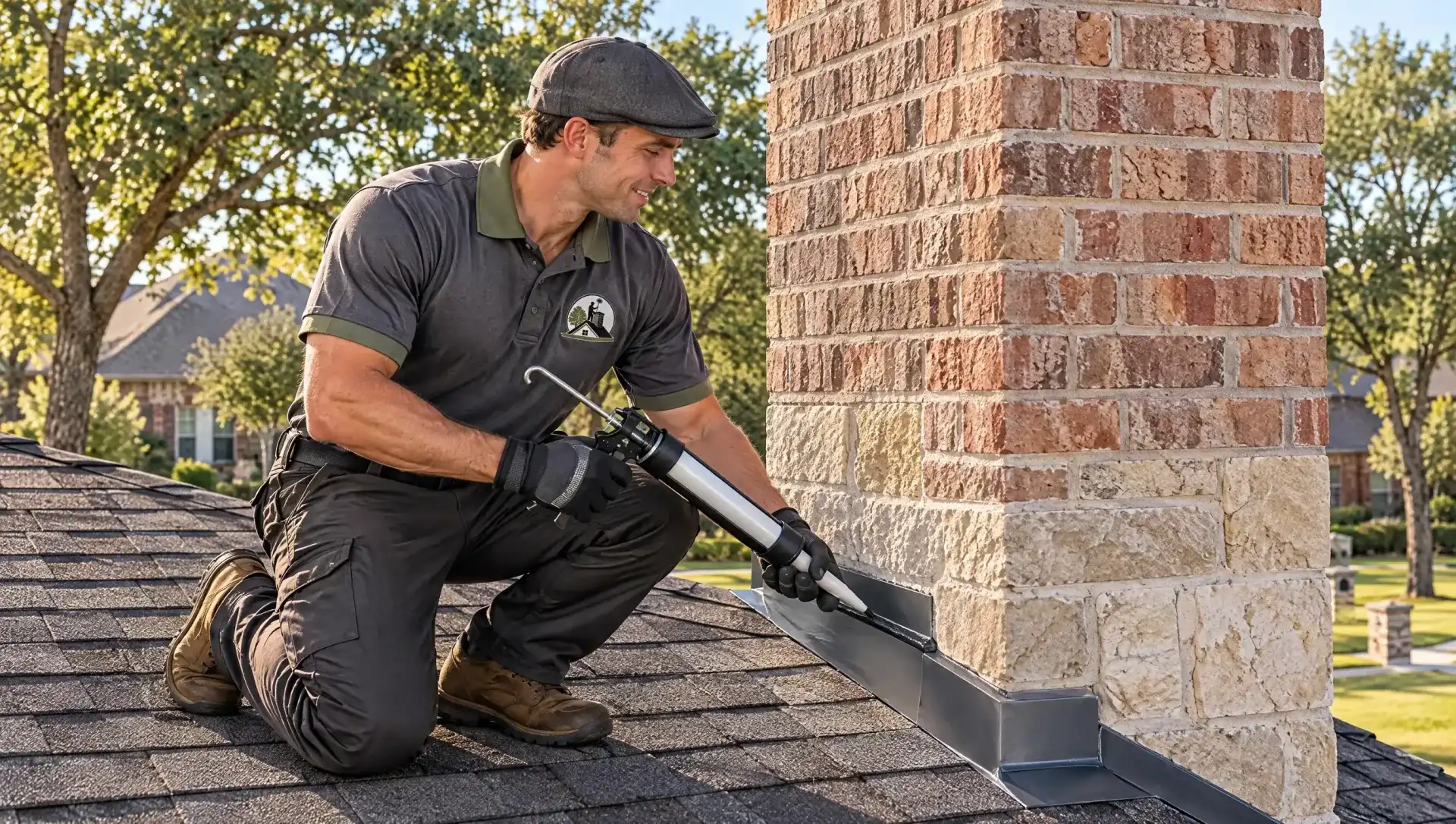
| Caulk or sealant in the joint | Traps water behind it, fails in the sun within a year |
A chimney that was tuckpointed with the wrong mortar often looks worse five years later than one that was never touched. Matching the type is the step most often skipped.
Chimney Crown Repair
Water that reaches the top mortar joints usually came through a cracked crown first. We check the crown on every tuckpointing visit and quote chimney crown repair on the same estimate when it needs it, since new joints under a leaking crown will not stay dry.
Chimney Waterproofing
Once the new mortar has cured, a breathable water repellent on the brick and joints keeps rain out of the masonry and extends the life of the repair. Chimney waterproofing is the finishing step, never a replacement for cutting out the failed joints.
Chimney Rebuild
When the mortar has failed from the roofline to the crown and the bricks shift under hand pressure, the honest repair is a partial rebuild from the roofline up with new brick, flue tile and crown. The chimney rebuild page explains when that line is crossed. Not sure which one you need? A chimney inspection with roof photos settles it, and the main chimney repair page covers the rest of what we fix.
Book Chimney Tuckpointing in Flower Mound
Flower Mound Chimney Sweep Professionals is veteran-owned and based on Long Prairie Rd in Flower Mound 75028. We tuckpoint chimneys in Flower Mound, Lewisville, Southlake, Colleyville, Keller, Fort Worth and Collin County, 7 days a week from 7 AM to 8 PM. Call (817) 518-6131 or send the form on this page. You get roof photos, a free written estimate and a firm price before we start. If water is already coming in, begin with chimney leak repair.