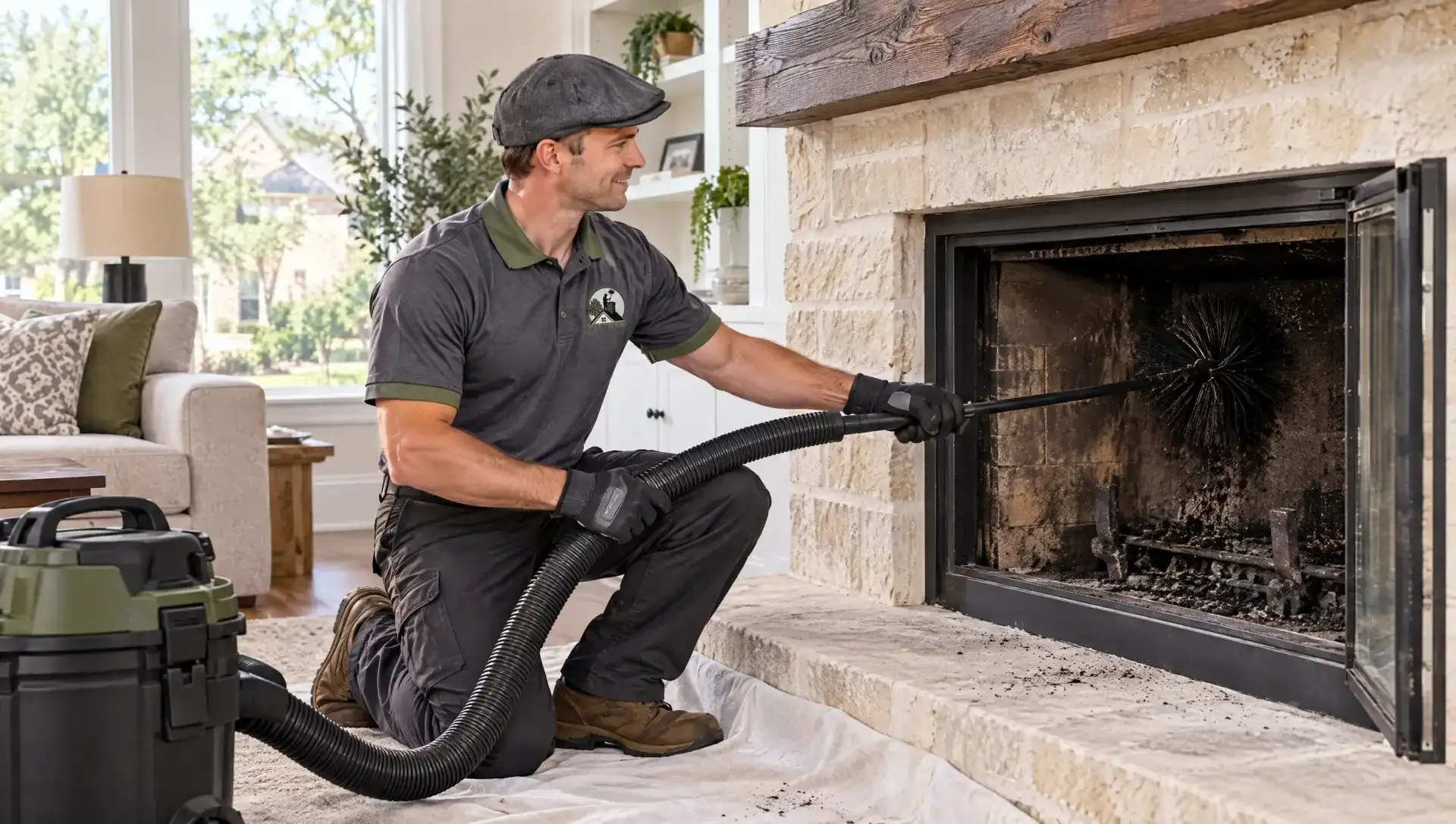
What Fireplace Cleaning in Flower Mound Includes
Flower Mound Chimney Sweep Professionals cleans the fireplace itself, the part of the system you look at every evening. Most Flower Mound homes built from the 1990s on have a factory-built metal fireplace in a wood-framed chase, and many of them have a gas starter or a full gas log set. Older homes near Grapevine Lake and Lake Lewisville have full masonry fireplaces with firebrick and a clay flue. We clean both types.
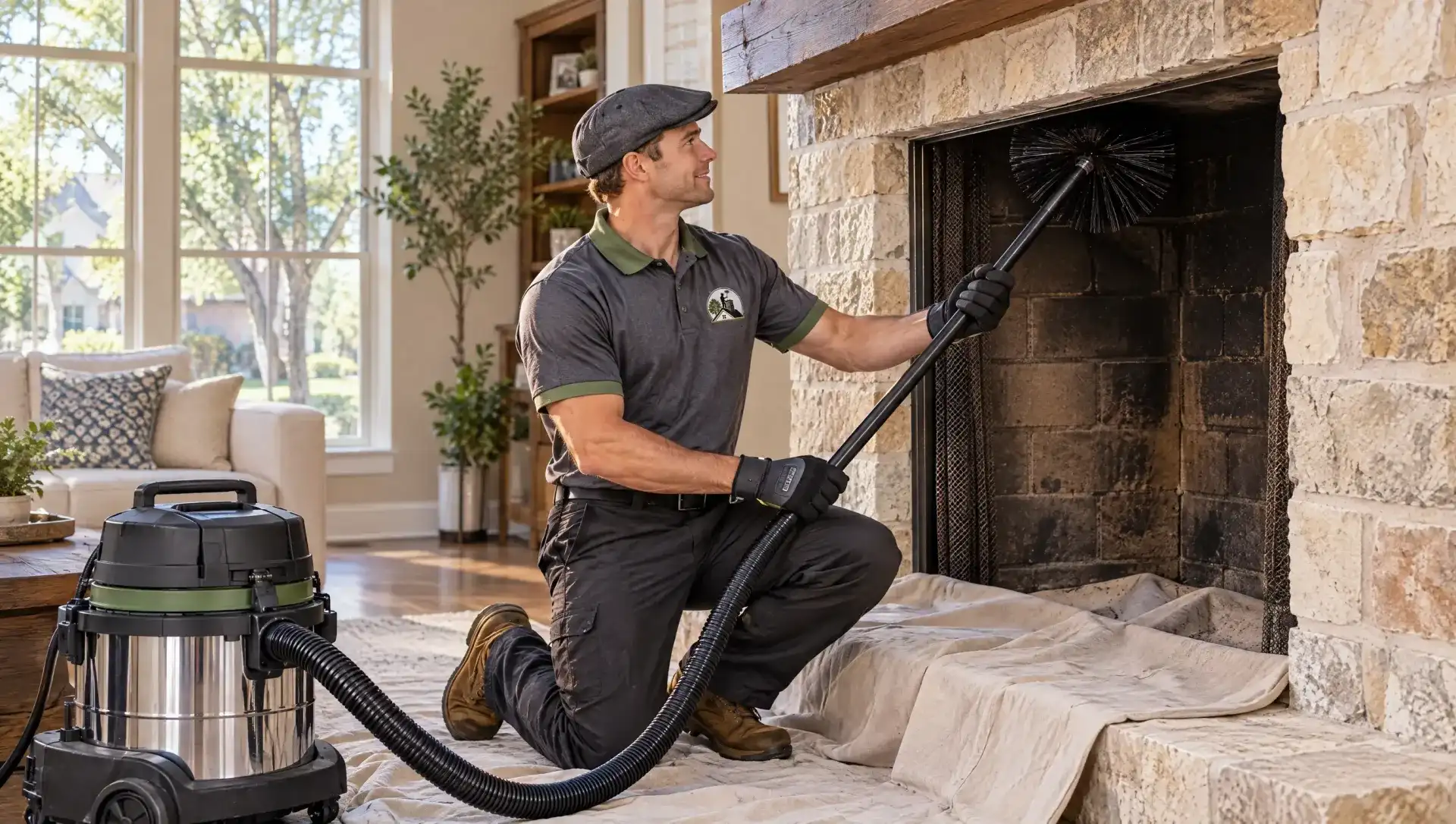
- Protect the room. Drop cloths from the door to the hearth. The fireplace opening is covered and a HEPA vacuum runs the whole time.
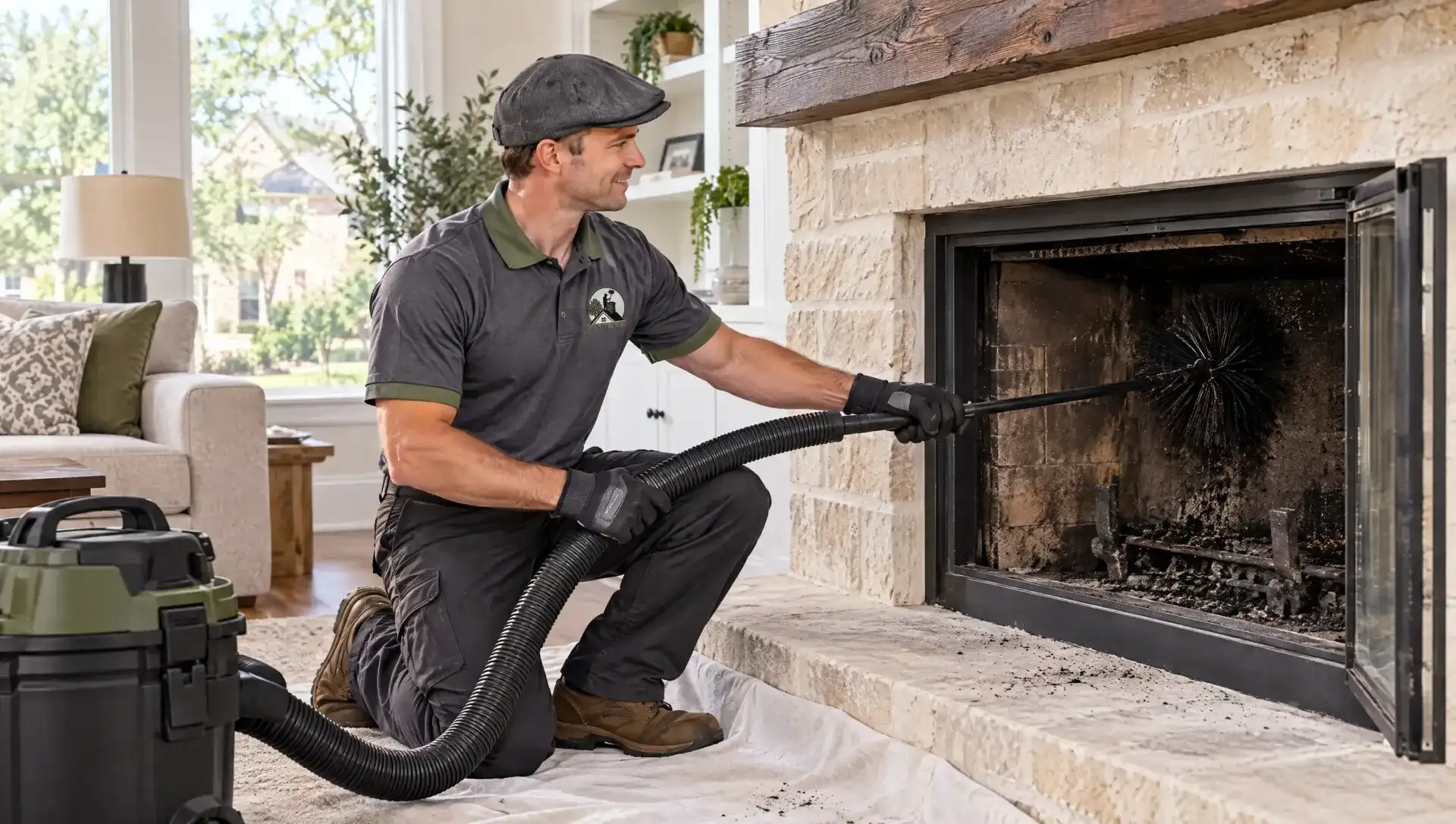
- Firebox. Ash and soot come out of the firebox, the grate, the ash dump and the corners behind the refractory panels. We look at the panels and firebrick for cracks while they are clean.
- Damper and smoke shelf. The damper is opened, scraped and checked. The smoke shelf behind it collects wet soot and leaves, so it is vacuumed out.
- Glass doors and screens. Baked-on film is scraped off the doors and the mesh screen is brushed clean.
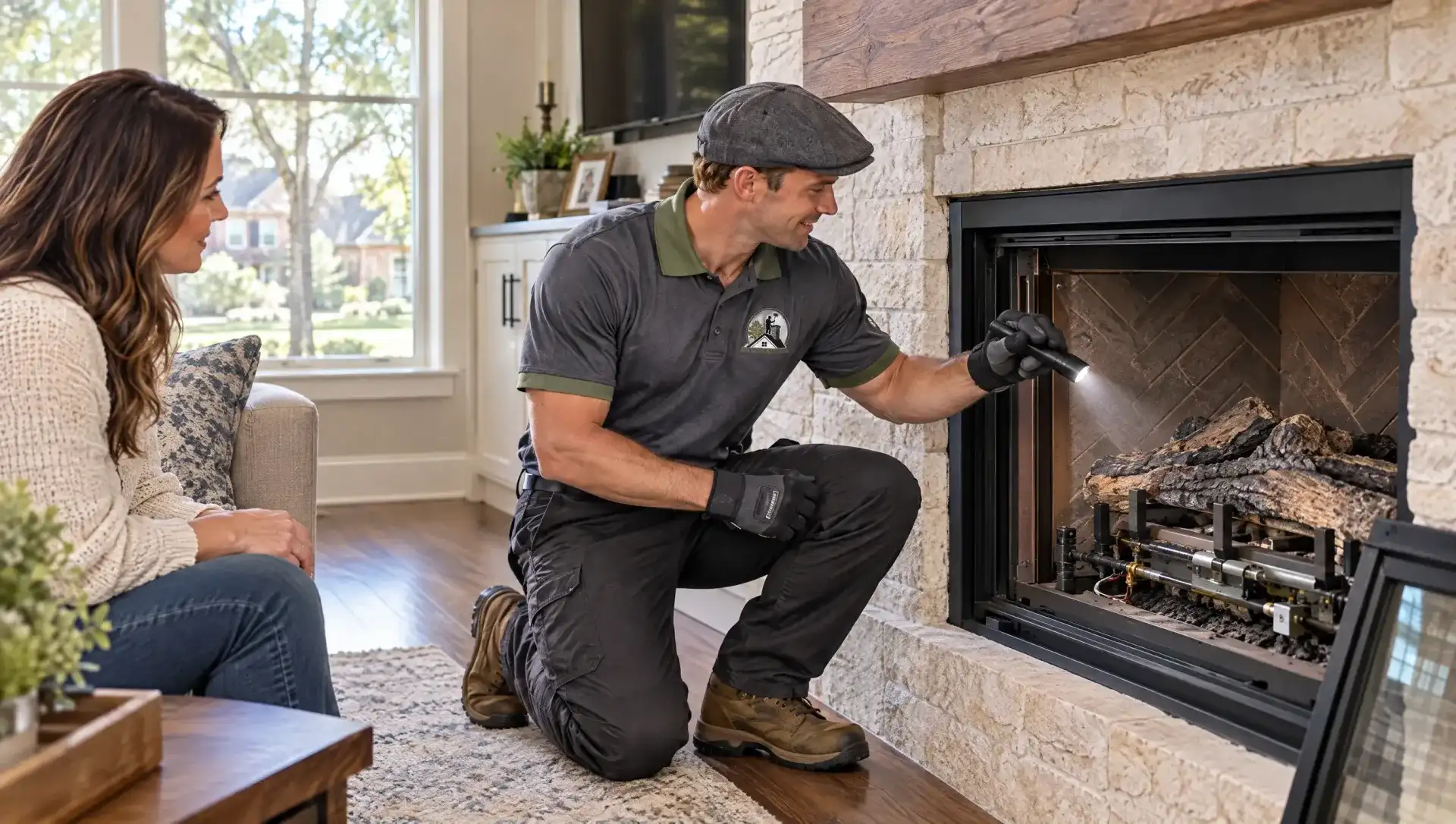
- Gas parts. On a gas fireplace the ceramic logs come out, the burner ports and pilot assembly are brushed and vacuumed, and the logs go back in the pattern the manufacturer calls for.
- Camera check and photos. A camera goes up the flue to see whether it needs a full sweep. You get before and after photos and a written price for anything else.
A fireplace cleaning on its own takes about 45 minutes. With a full chimney sweep of the flue, plan on 60 to 90 minutes.
Why Flower Mound Fireplaces Get Dirty Fast
Fireplaces here only run on the cold nights between Thanksgiving and February, so people assume they stay clean. Three local habits say otherwise.
- Short, hot fires on gas starters. Lighting wood with a gas starter and letting it burn for an hour makes a cooler fire that leaves more soot and creosote in the firebox and flue than a long burn.
- Humid summers. From June to September the humidity turns dry soot in the smoke shelf into a sticky paste. That is the source of the sour smell many homeowners notice when the AC runs.
- Post oak and cedar elm firewood. Local hardwood burns well when it is dry, but most of it is sold green. Wet wood makes smoke, and smoke makes creosote.
The National Fire Protection Association reports that heating equipment is one of the leading causes of home fires in the United States, and fireplaces and chimneys are a large share of that. A clean firebox and a checked flue are the cheap end of fire safety. You can read the NFPA’s heating safety guidance for the full picture.
Signs You Need Fireplace Cleaning
- A smoky or sour smell from the fireplace, especially in summer
- Black film on the glass doors that does not wipe off
- Ash piled above the grate or spilling onto the hearth
- Yellow or orange flames on a gas fireplace that used to burn blue
- Soot on the ceramic logs or on the wall above the opening
- Smoke rolling into the room when you light a fire
- Scratching sounds or droppings in the firebox, which point to animals in the flue
One of these means book a cleaning. Smoke in the room or animal sounds means stop using the fireplace until we look at it. Animal noise is an animal removal call first, then a cleaning.
Wood Fireplace vs Gas Fireplace Cleaning
| Fireplace type | What gets dirty | What we clean | How often |
|---|---|---|---|
| Masonry wood fireplace | Creosote, soot, ash, smoke shelf | Firebox, firebrick joints, damper, smoke shelf, grate, doors, flue by camera | Yearly, and before the first fire if it sat all summer |
| Factory-built wood fireplace | Soot on refractory panels, creosote in the metal flue | Panels, firebox floor, damper, doors, screen, flue by camera | Yearly, with a close look at the panels for cracks |
| Gas log fireplace | Dust on burner and pilot, soot on logs, haze on glass | Logs, burner ports, pilot, firebox, glass, vent check | Yearly, before the season |
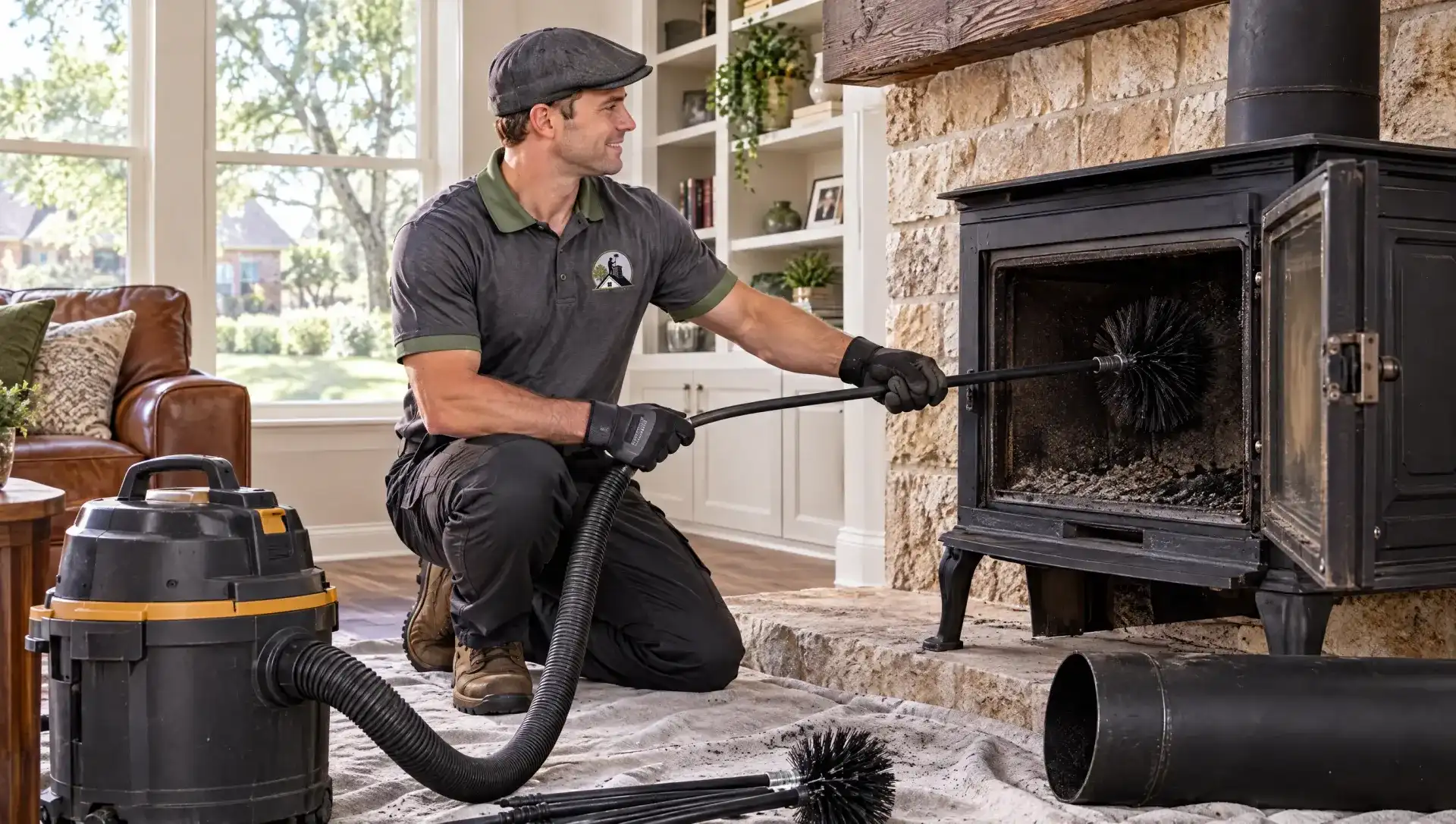
| Wood stove or insert | Ash, creosote in the baffle and stovepipe | Stove interior, baffle, glass, stovepipe, liner | Yearly, or twice if you burn most nights |
Wood stoves get their own page on wood stove cleaning, since the baffle and stovepipe take different tools.
Chimney Cleaning
The fireplace is the bottom of the system. Everything the fire makes goes up the flue, and that is where creosote builds up out of sight. Our chimney cleaning page explains how we brush the flue, smoke chamber and cap. If the camera shows a shiny, glazed layer that a brush will not move, that is a creosote removal job with rotary tools and a chemical treatment. Most Flower Mound homeowners book the fireplace cleaning and the chimney sweep together and get it all done in one morning.
Fireplace Inspection
Every cleaning includes a look at the firebox, damper, glass and gas parts while they are clean, because that is when cracks and rust show. A full fireplace inspection adds the clearances, the hearth extension, the gas valve and the vent, and it is the right call before the first fire in a house you just bought. If we find a cracked refractory panel or a loose firebrick, the firebox repair page explains what that fix looks like. If a gas fireplace will not light or burns yellow after the cleaning, that moves to gas fireplace repair.
Book Fireplace Cleaning in Flower Mound
Flower Mound Chimney Sweep Professionals is veteran-owned and based on Long Prairie Rd (FM 2499) in Flower Mound 75028. We clean fireplaces in Flower Mound, Lewisville, Southlake, Colleyville, Keller, Fort Worth and Collin County, 7 days a week from 7 AM to 8 PM. Call (817) 518-6131 or send the form on this page. You get a firm price before we start, photos of what we find, and a written estimate for any repair at no charge. Our customers say we show up on time and explain the cleaning as we go, and you can read their words on our reviews page.