What Chimney Cleaning in Flower Mound Covers
A chimney is more than the pipe you see on the roof. Between the fire and the sky there are five parts that collect creosote and soot, and Flower Mound Chimney Sweep Professionals cleans all of them on every visit.
| Part of the chimney | Where it is | What we clean out |
|---|---|---|
| Firebox | Where the fire burns | Ash, soot, loose mortar, debris behind the grate |
| Damper and throat | Just above the firebox | Soot on the plate and frame, rust flakes |
| Smoke shelf | Behind the damper | Fallen creosote, leaves, nest material, water paste |
| Smoke chamber | The funnel above the damper | Thick creosote on the sloped walls |
| Flue | The full run to the top | Creosote and soot on clay tile or metal walls |
The flue gets most of the attention, but the smoke shelf and smoke chamber hold a surprising share of the buildup. Rain that gets past a loose cap turns the soot on the shelf into a paste that smells in July. We vacuum it out rather than leaving it.
Chimney Flue Cleaning for Wood and Gas Fireplaces
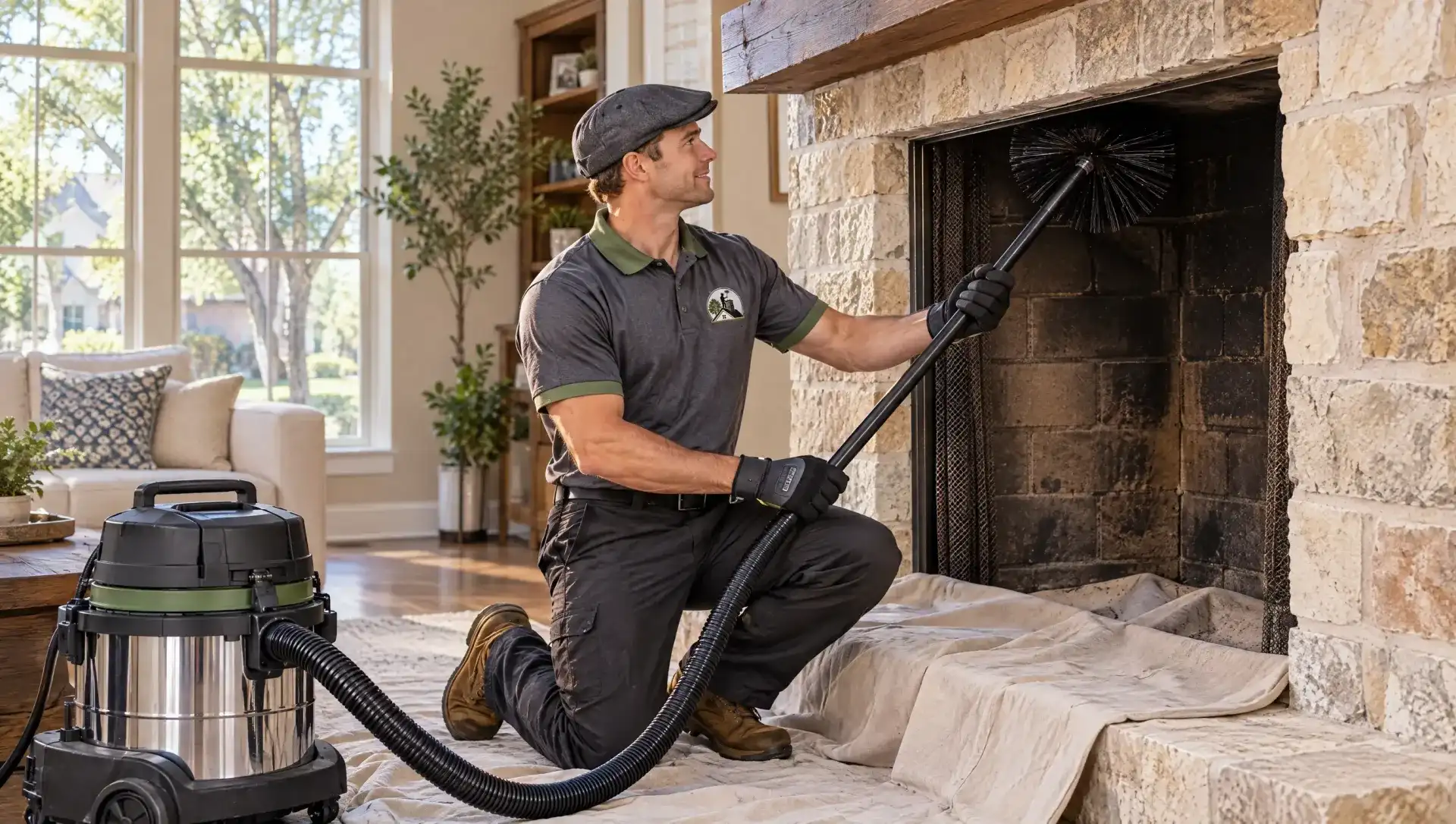
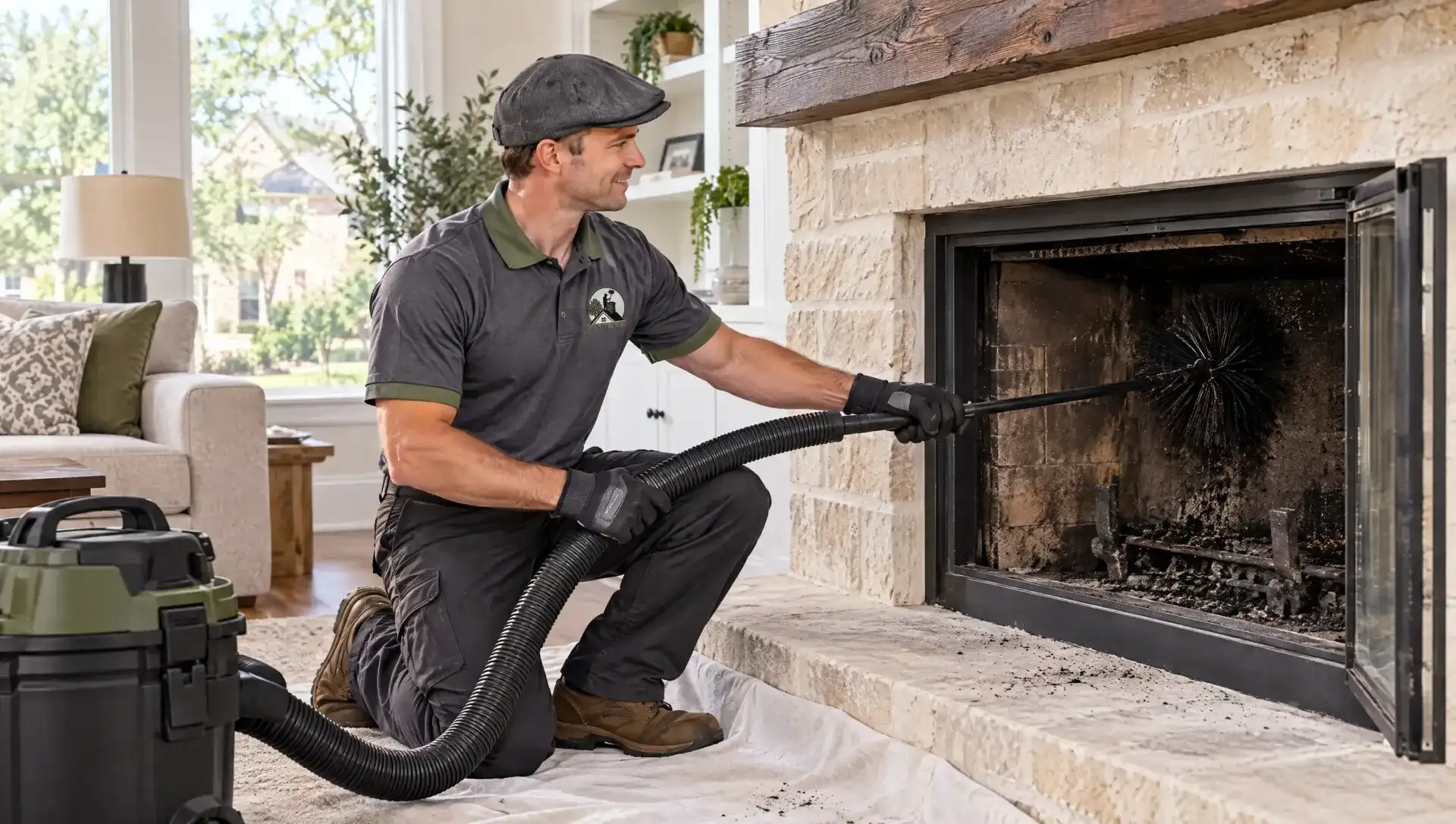
Flue cleaning is the core of the job. We brush from the firebox up with rotary rods, using a brush sized to the flue. Clay tile flues in the older masonry chimneys near Grapevine Lake and Lake Lewisville take a stiff poly brush. The thin metal flues in factory-built fireplaces, which most Flower Mound homes built from the 1990s on have, take a softer brush and a close look for rust.
Gas fireplaces get a flue cleaning too. Gas burns clean, so the creosote is light, but the vent still fills with leaves, nests and rusted parts. A gas flue that cannot vent sends carbon monoxide into the house. We check the burner, pilot and venting on gas units at the same time.
Wood stoves and inserts have a stovepipe or liner that is cleaned with the same tools. Our wood stove cleaning page covers the baffle and the stovepipe connections.
Why Flower Mound Chimneys Get Dirty Faster Than You Expect
Fireplaces here only burn a few months a year, so homeowners assume there is little to clean. Three local things change that:
- Short, slow fires. A fire lit for an hour on a 45-degree evening never gets the flue hot. Cool smoke condenses into creosote faster than a long hot fire does.
- Storm water. Spring hail loosens caps and cracks crowns. Rain in the flue turns soot into a paste that sticks.
- Wildlife. Chimney swifts nest in open flues from May to September, and raccoons and squirrels near the lakes and the Cross Timbers woods look for a warm shaft every spring. A nest on the smoke shelf is a blockage and a fire risk. Our chimney animal removal page explains how we handle it.
Signs Your Chimney Needs Cleaning
- A campfire smell in the house, worst on humid summer days
- Smoke rolling back into the room when the fire is lit
- Black, flaky or shiny buildup you can see above the damper
- Soot dropping onto the firebox floor between fires
- Fires that are hard to start or burn weak and lazy
- Scratching, chirping or droppings in the fireplace
- More than a year since the last cleaning or inspection
One sign is enough to book a cleaning. Two or more means stop using the fireplace until we have looked at it.
How We Clean a Chimney
- Cover and seal. Drop cloths from the door to the hearth. The fireplace opening is sealed and a HEPA vacuum runs until we pack up.
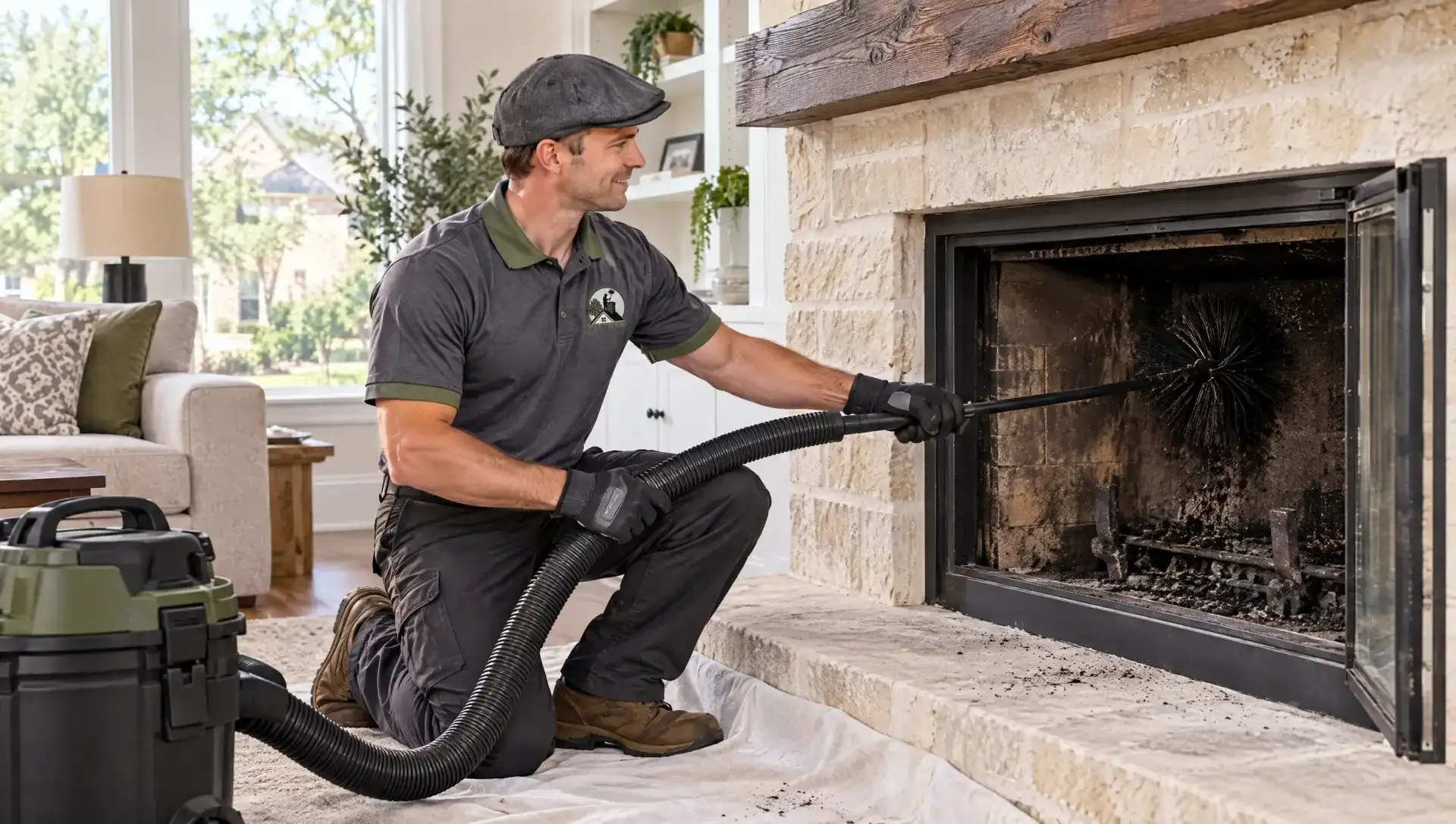
- Brush the flue. Rotary rods and the right brush, from the firebox to the top of the flue. Loose creosote falls to the firebox and into the vacuum.
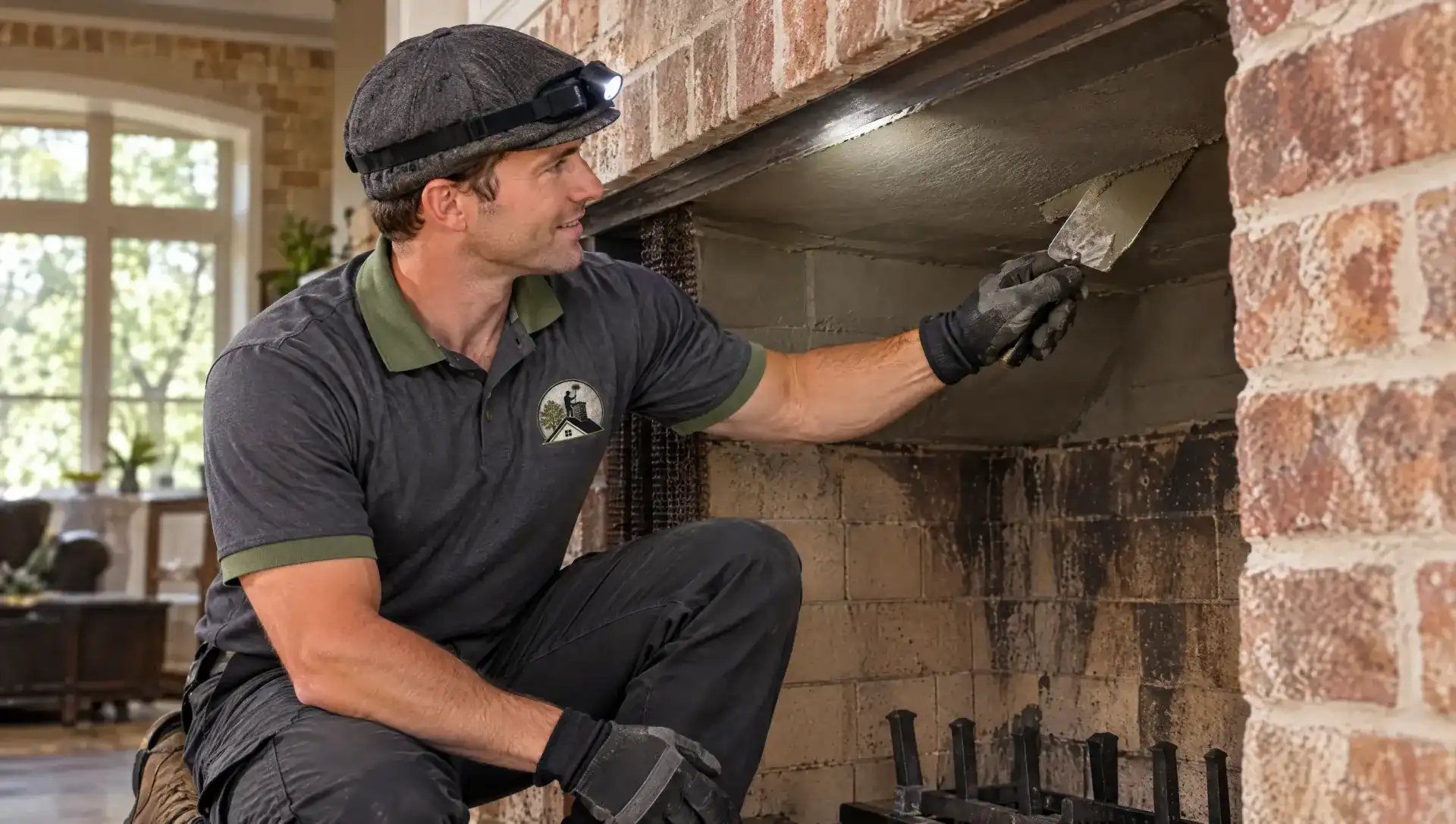
- Clean the chamber and shelf. The smoke chamber walls, smoke shelf and damper are brushed and vacuumed by hand.
- Clean the firebox. Ash, soot and debris come out. We check the panels or firebrick for cracks while it is empty.
- Camera check. A camera goes up the flue to confirm the walls are clean and to look for cracked tiles, gaps and leftover glaze.
- Roof check. Cap, crown, flashing and the top of the flue are checked and photographed.
- Report. Before and after photos, a plain list of anything that needs attention, and a written price for any repair. No pressure.
The whole visit takes about 60 to 90 minutes for one fireplace.
Chimney Sweep
Chimney cleaning and a chimney sweep in Flower Mound are the same service. “Sweep” is the older word and the name of the person doing the work. Our chimney sweep page explains the Level 1 inspection that comes with every visit and what we check on the roof.
Smoke Chamber Cleaning and Creosote Removal
The two parts of a chimney a plain flue brush handles worst are the smoke chamber and glazed creosote. Both are covered in the same visit when the camera finds them.
Smoke Chamber Cleaning
The smoke chamber is the sloped funnel between the damper and the flue. Its rough, stepped walls grab creosote faster than the smooth flue above. In older masonry chimneys the walls are often unparged brick with open mortar joints. Our smoke chamber cleaning page covers how we clean it and when parging the walls smooth makes sense.
Creosote Removal
A brush handles loose, flaky creosote. It does nothing to the shiny, hardened glaze that builds up from slow fires and wet wood. When the camera finds glaze, we talk through creosote removal with rotary chains and a chemical treatment before doing anything extra. The Chimney Safety Institute of America says masonry fireplaces should be swept at 1/8 inch of buildup, and sooner if there is any glaze, because glazed creosote is the fuel for most chimney fires. Its homeowner resources page covers the standard in plain language.
Chimney Inspection
Every cleaning includes a Level 1 chimney inspection. NFPA 211, the national standard for chimneys and fireplaces, calls for a yearly inspection of every chimney, whether or not it needs cleaning that year. If you are buying or selling a home, have had a chimney fire, or are switching from wood to gas logs, a Level 2 inspection with a full video scan is the right call.
Book Chimney Cleaning in Flower Mound
Flower Mound Chimney Sweep Professionals is veteran-owned and based on Long Prairie Rd (FM 2499) in Flower Mound 75028. We clean chimneys in Flower Mound, Lewisville, Southlake, Colleyville, Keller, Fort Worth and Collin County, 7 days a week from 7 AM to 8 PM. Call (817) 518-6131 or send the form on this page. You get a firm price before we start, photos of what we found, and a free written estimate for any repair. See what customers say on our reviews page.