What Chimney Animal Removal in Flower Mound Includes
An open flue is a warm, dark, sheltered hole, which is exactly what a raccoon, a squirrel or a bird is looking for in spring. Flower Mound Chimney Sweep Professionals removes animals from chimneys in Flower Mound the humane way, cleans up what they left behind, and closes the flue so it does not happen twice.
A removal visit goes like this:
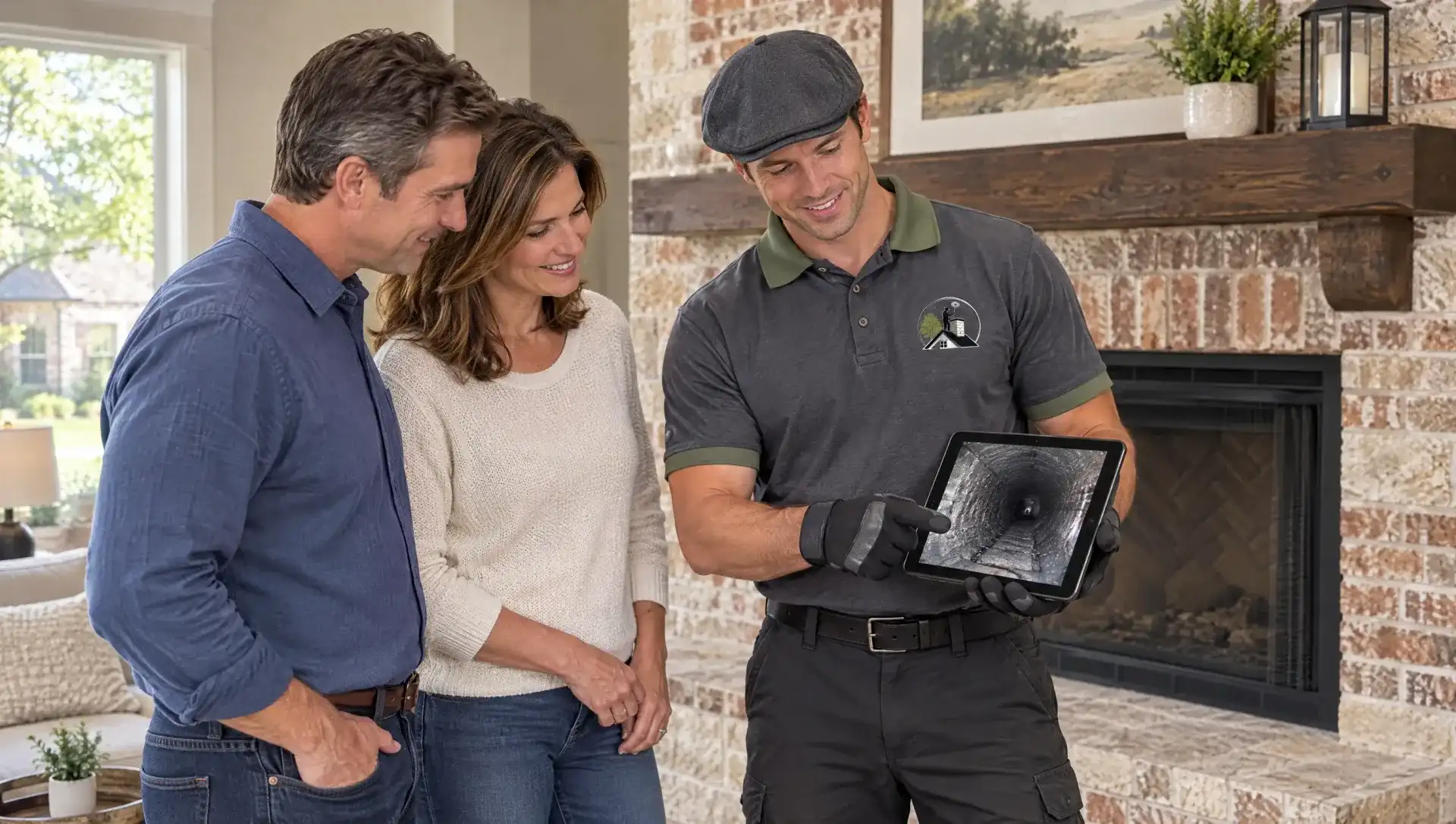
- Find out what it is. We listen, check the smoke shelf with a light and run a camera up the flue. A raccoon on the shelf, a squirrel at the bottom, a swift nest glued to the wall and a bird trapped above the damper each need a different approach.
- Get it out alive. A squirrel that cannot climb out gets a rope or a rough board to climb. A raccoon mother is removed with her kits so she can move them to a new den. Trapped birds are caught by hand and released outside. Nothing is smoked, poisoned or sealed in.
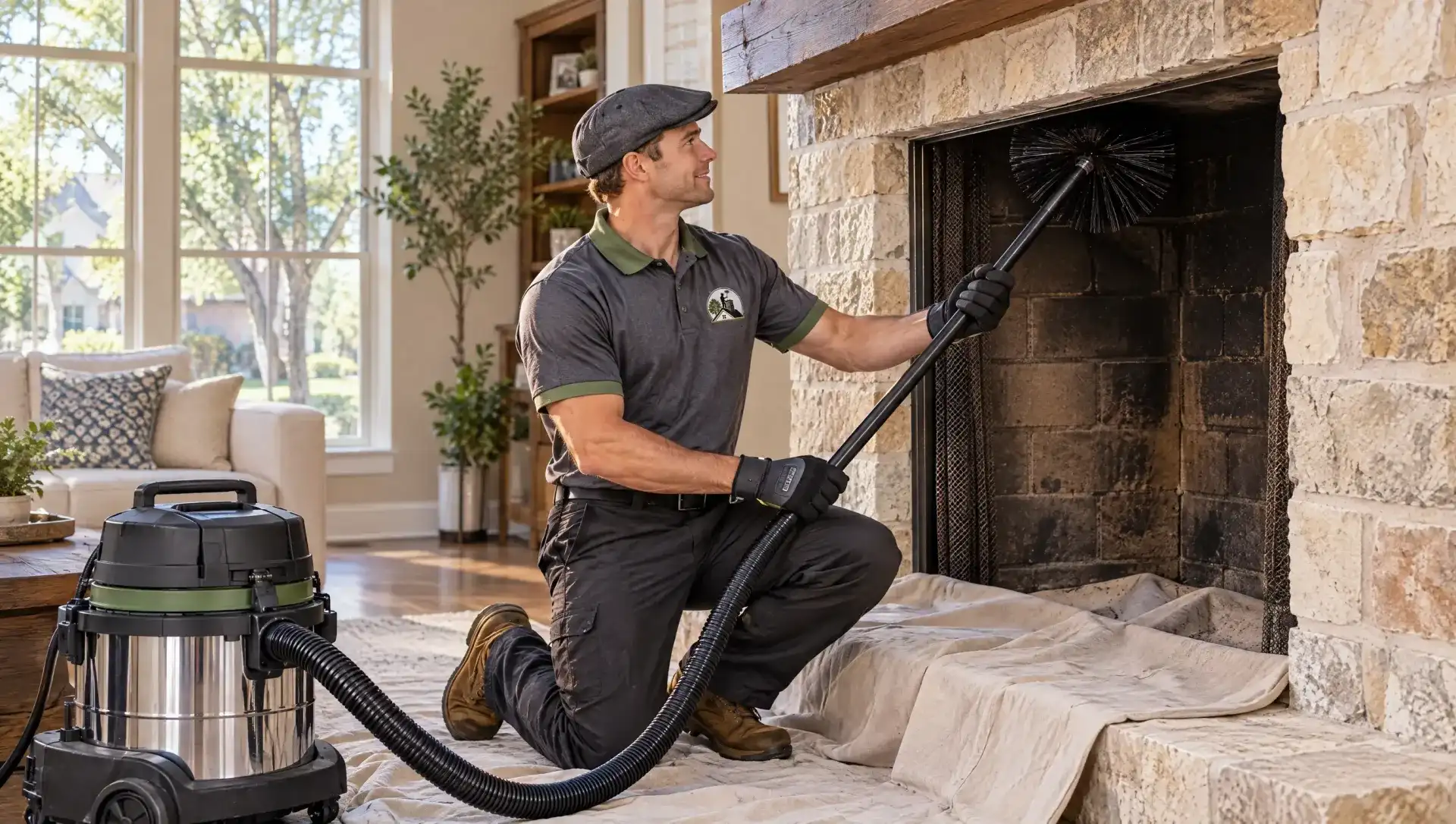
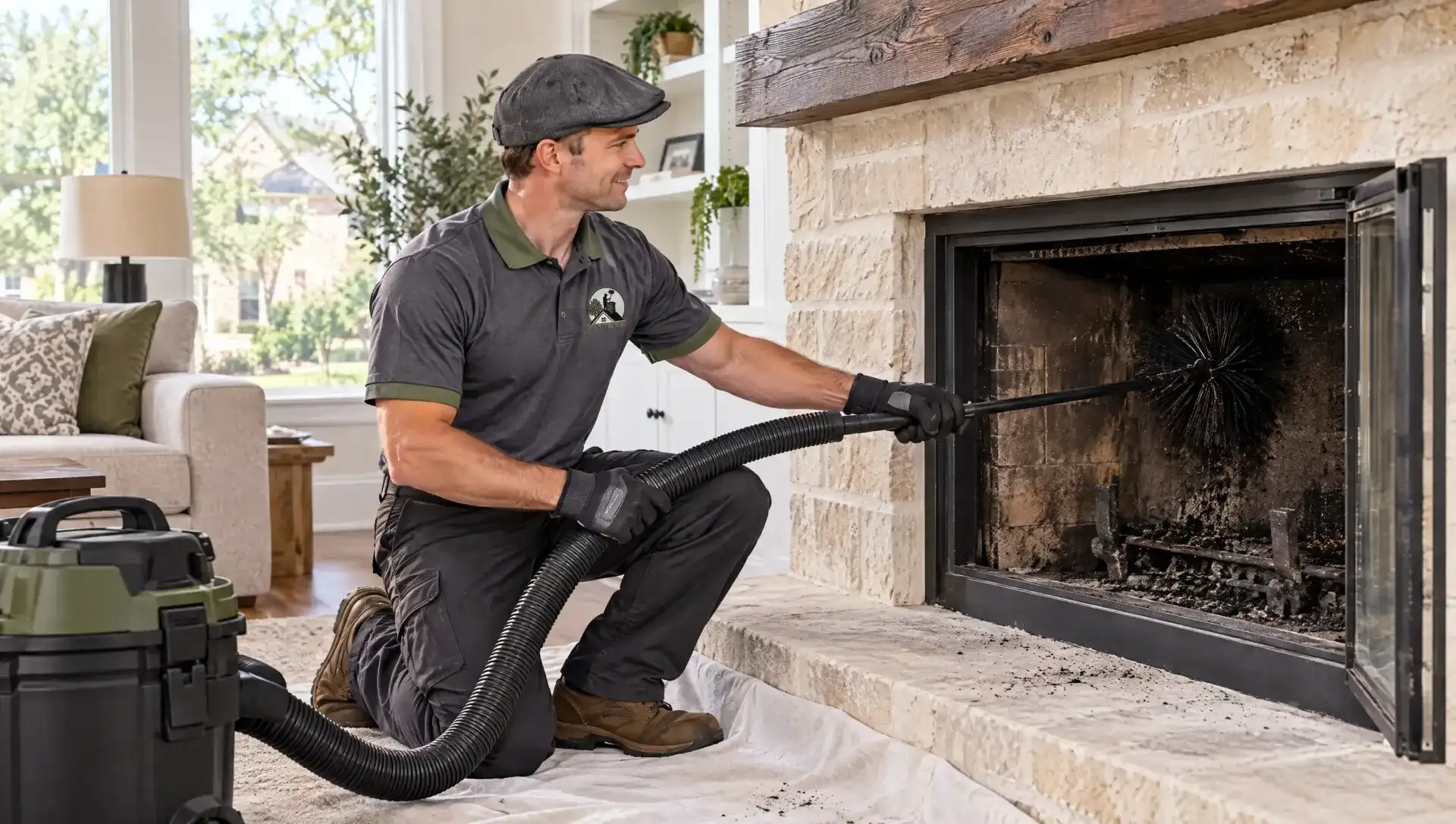
- Clean. The nest, droppings, fur and feathers come out with a HEPA vacuum, and the flue is swept. Raccoon droppings are handled as a health hazard.
- Treat the odor. A dead animal or a den leaves a smell that gets worse in summer heat. We clean the shelf and firebox and treat the flue.
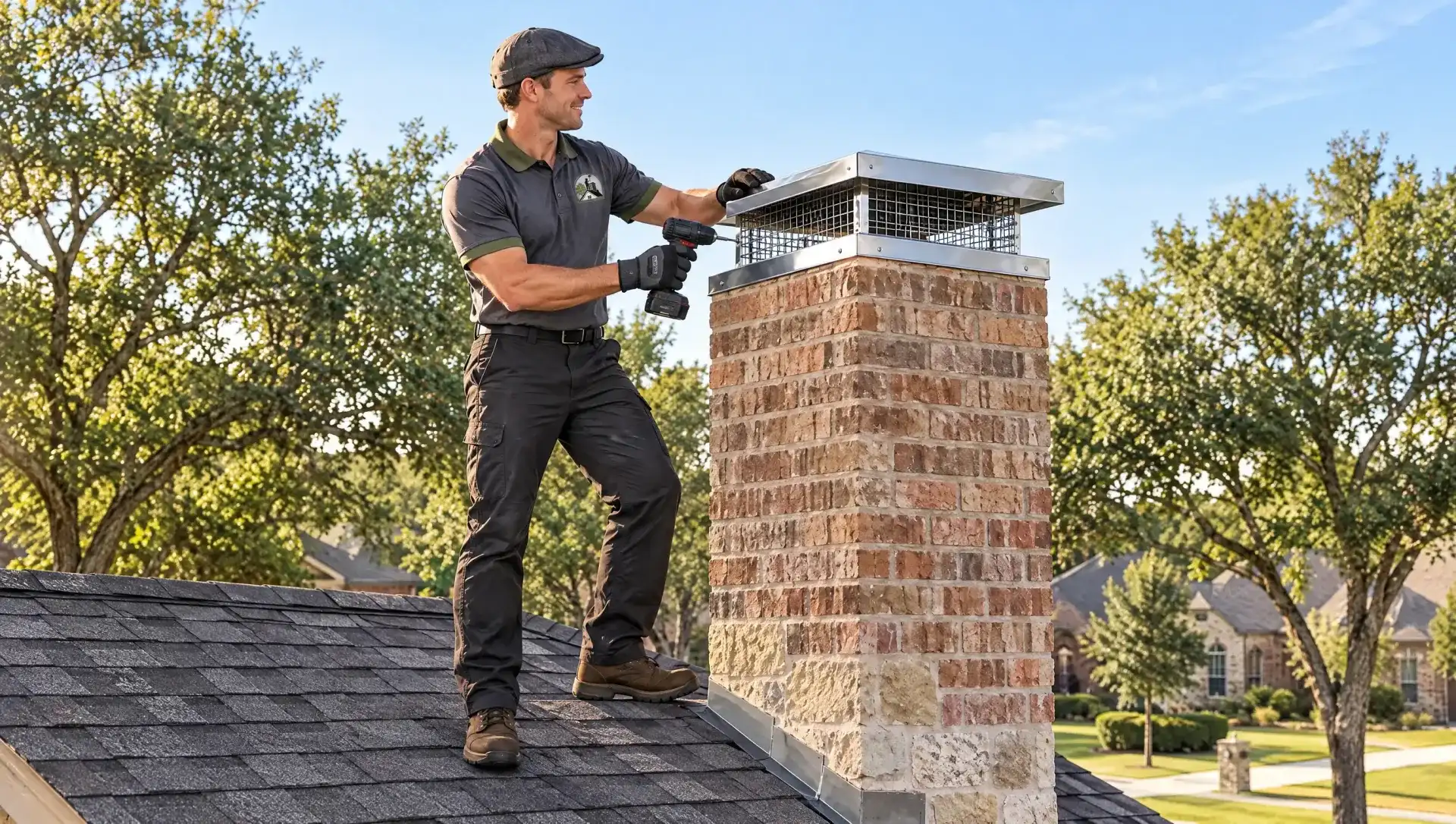
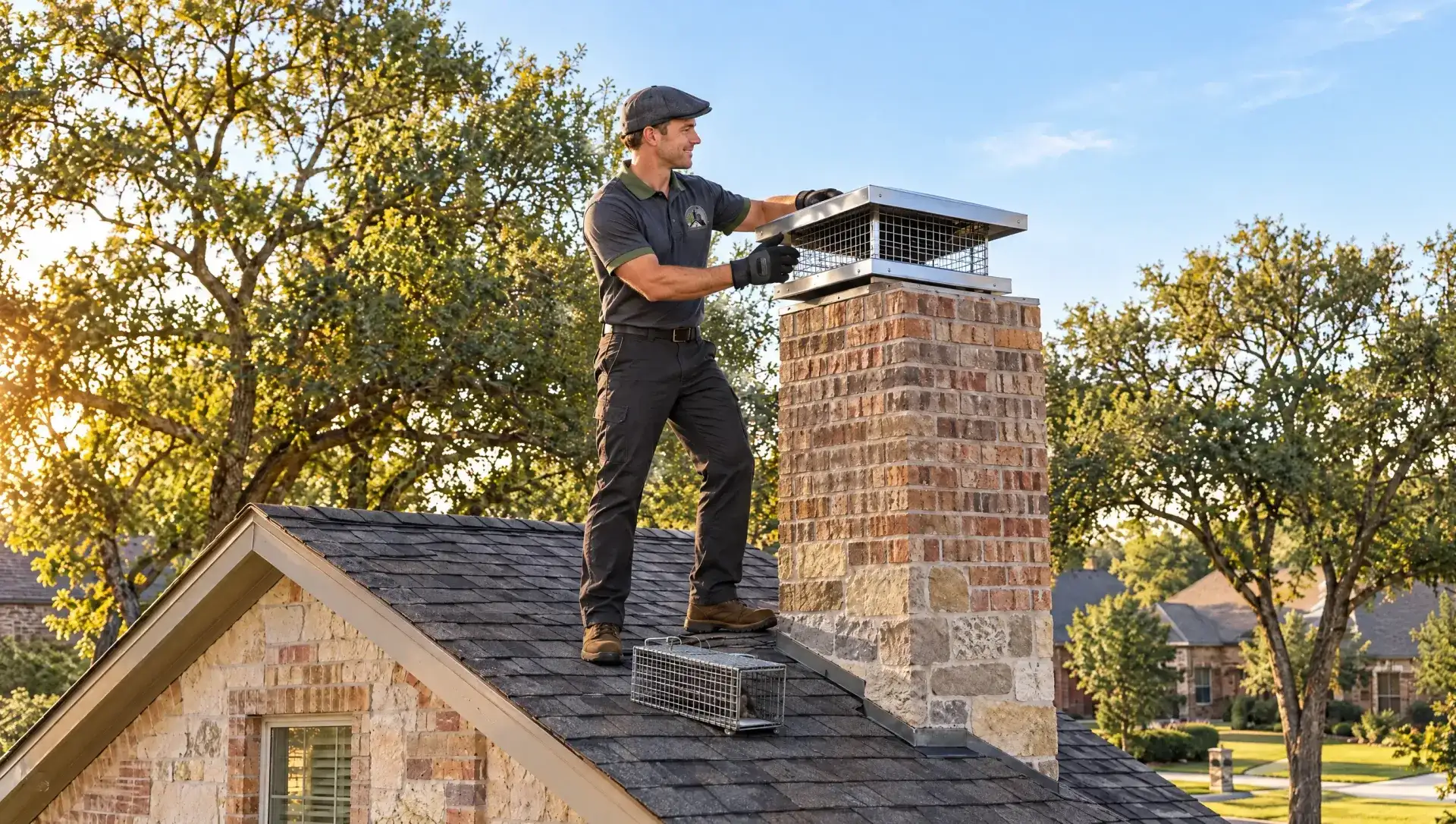
- Cap it. A stainless steel cap with mesh sides goes on every open flue, and we check the dryer vent cap and chase cover while we are on the roof.
Chimney Swifts Are Protected by Federal Law
Chimney swifts are small, dark, fast-flying birds that nest inside chimneys in North Texas from May to September. They glue a half-cup nest of twigs to the flue wall with their saliva, and the chattering you hear in June and July is the young being fed.
Chimney swifts are protected under the federal Migratory Bird Treaty Act of 1918, enforced by the U.S. Fish and Wildlife Service. An active nest, eggs or young cannot be removed or disturbed. In practice that means:
- If swifts are nesting, we wait. The young leave the nest about a month after hatching, and the family leaves the chimney by late summer or early fall.
- Once the chimney is empty, we sweep the nest and droppings out and install a cap.
- A cap installed before May keeps swifts from nesting at all. Swifts are losing roost sites as old chimneys get capped, so if you like having them, leave one flue open and sweep it in the fall.
Swift nests are small and rarely block a flue, but the droppings carry a fungus that can cause histoplasmosis when the dust is disturbed. That is why the cleanup uses a HEPA vacuum and not a shop vac.
Animals We Find in Flower Mound Chimneys
| Animal | When | What it does | How we handle it |
|---|---|---|---|
| Raccoon | February to June, denning mothers | Lives on the smoke shelf with kits, leaves droppings | Removed with kits, shelf cleaned, cap installed |
| Fox squirrel | Fall and spring | Falls in and cannot climb a smooth flue | Given a way to climb out, flue capped |
| Chimney swift | May to September | Nests on the flue wall, federally protected | Wait until the young leave, then sweep and cap |
| Starling, sparrow | March to July | Builds a bulky nest above the damper or in the cap | Nest removed when inactive, cap repaired |
| Bat | Summer | Roosts in the flue or chase | Leaves at dusk, flue sealed after it is empty, cap installed |
| Snake | Summer | Follows birds and rodents in | Removed and released away from the house |
Homes near Grapevine Lake, Lake Lewisville, the Cross Timbers woods and the creeks through Bridlewood and Wellington see the most animal calls, because the trees and water bring the wildlife close.
Signs You Have an Animal in the Chimney
- Scratching, chirping or thumping behind the damper, worse at dusk and dawn
- A strong smell from the fireplace in warm weather
- Twigs, leaves, droppings or fur on the firebox floor or smoke shelf
- Flies gathering at the fireplace, which usually means a dead animal
- Birds circling and dropping into the chimney top at sunset
- A damper that will not close because something is on the shelf
- Smoke backing into the room from a flue blocked by a nest
Do not light a fire to drive an animal out. It does not work, it kills the animal, and a nest can catch fire inside the flue.
Chimney Cap Installation
The cap is the fix. A stainless steel chimney cap with mesh sides closes the flue to animals while letting smoke out, and it keeps rain off the damper too. Factory-built fireplaces need a cap matched to the flue pipe, and masonry chimneys with two flues can take a single custom cap. We install caps the same visit as the removal, and a cap goes on every open flue on the house, not just the one with the problem.
Chimney Sweep and Chimney Cleaning
A nest or a den always leaves debris in the flue, so every removal ends with a chimney sweep. Our chimney cleaning page explains the full flue, smoke chamber and firebox cleaning, and the chimney inspection page covers the camera check that confirms the flue is clear before the next fire. A damper that was forced or bent during the ordeal is covered under chimney damper repair.
Dryer Vent Cleaning
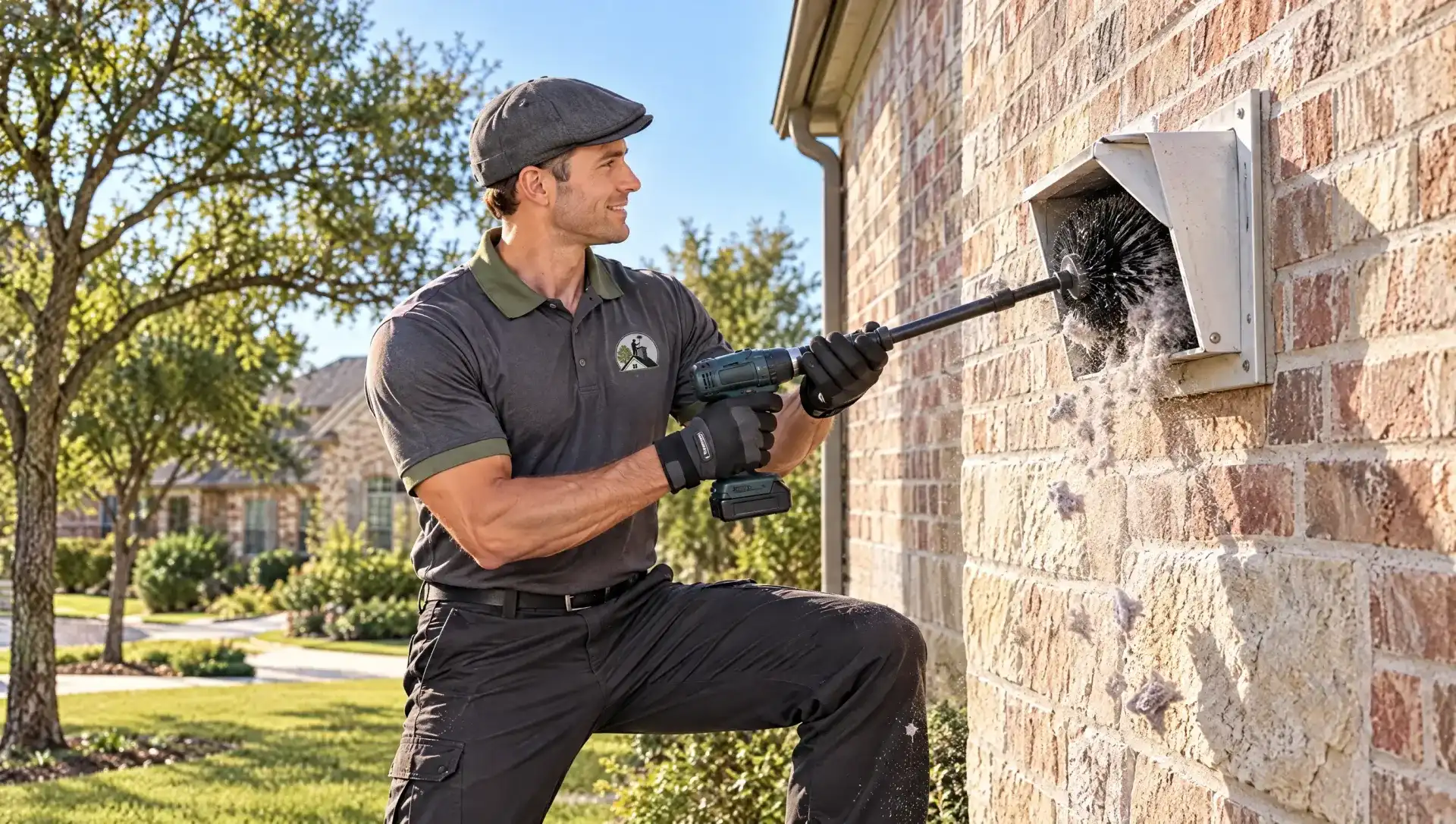
Birds build in dryer vent caps for the same reason they build in chimneys: warm air and shelter. A nest in the vent blocks it and is a fire risk. Our dryer vent cleaning page covers nest removal, cleaning and a cap with a working flap.
Book Chimney Animal Removal in Flower Mound
Flower Mound Chimney Sweep Professionals is veteran-owned and based on Long Prairie Rd in Flower Mound 75028. We remove animals from chimneys in Flower Mound, Lewisville, Southlake, Colleyville, Keller, Fort Worth and Collin County, 7 days a week from 7 AM to 8 PM. Call (817) 518-6131 or send the form on this page. You get a firm price before we start and photos of the flue before and after. Read what customers say on our reviews page.