What Makes a Fireplace Smell Worse in Summer
Three things line up in a Flower Mound summer to make a fireplace that smelled fine in January stink in July.
- Creosote and soot are the source. Creosote is the tar-like byproduct of burning wood. It coats the flue, the smoke chamber and the smoke shelf behind the damper. It smells like a cold campfire all year, but it is mild when the air is cool and dry.
- Heat and humidity turn up the odor. When the attic and the chimney reach 120°F on a 100°F day and the humidity rolls in, moisture soaks into the creosote and the buildup releases its smell. The same thing happens after a heavy rain gets into an uncapped flue and wets the soot.
- Air conditioning pulls it inside. Your AC, bathroom fans, range hood and dryer all push air out of the house. The house makes up that air through the easiest opening it can find, and an open or leaky damper on a 12-inch flue is the biggest hole in the building. That is negative pressure, and it draws chimney air straight into the living space.
You are not imagining it, and it does not mean the fireplace is unsafe to sit near. It means the chimney needs attention before fall.
What the Smell Tells You
| What it smells like | Likely cause | What fixes it |
|---|---|---|
| Campfire, smoky, barbecue | Creosote and soot in the flue and on the smoke shelf | Chimney sweep |
| Musty, like a wet basement | Water in the chimney from a missing cap, cracked crown or leak | Cap, crown or flashing repair, then a sweep |
| Sharp, rotten, like something died | Animal, nest or droppings on the smoke shelf | Animal removal, cleaning, cap |
| Sour or chemical | Glazed stage 3 creosote, or a gas log set burning dirty | Creosote removal, gas fireplace service |
A smell that got worse after a spring storm almost always has a water part to it. A smell that showed up in May or June with scratching sounds is usually chimney swifts or a squirrel.
Why Air Comes Down the Chimney in a Flower Mound House
Flower Mound homes built from the 1990s on are tight. Good windows, sealed doors and foam in the attic mean the house has fewer leaks for makeup air, so the chimney does more of that work. Most of these homes have a factory-built fireplace with a metal flue inside a wood chase, and the thin throat damper on those units never seals well. Older masonry chimneys near Grapevine Lake and Lake Lewisville have cast-iron dampers that rust, warp and leave a gap.
Two other things make it worse. Running the AC with the house closed up creates steady negative pressure all day. And a chimney on an exterior wall holds cool, heavy air at night, so the airflow naturally reverses downward when the fireplace is cold.
How to Get Your Fireplace to Stop Smelling
Start at the top of this list and work down:
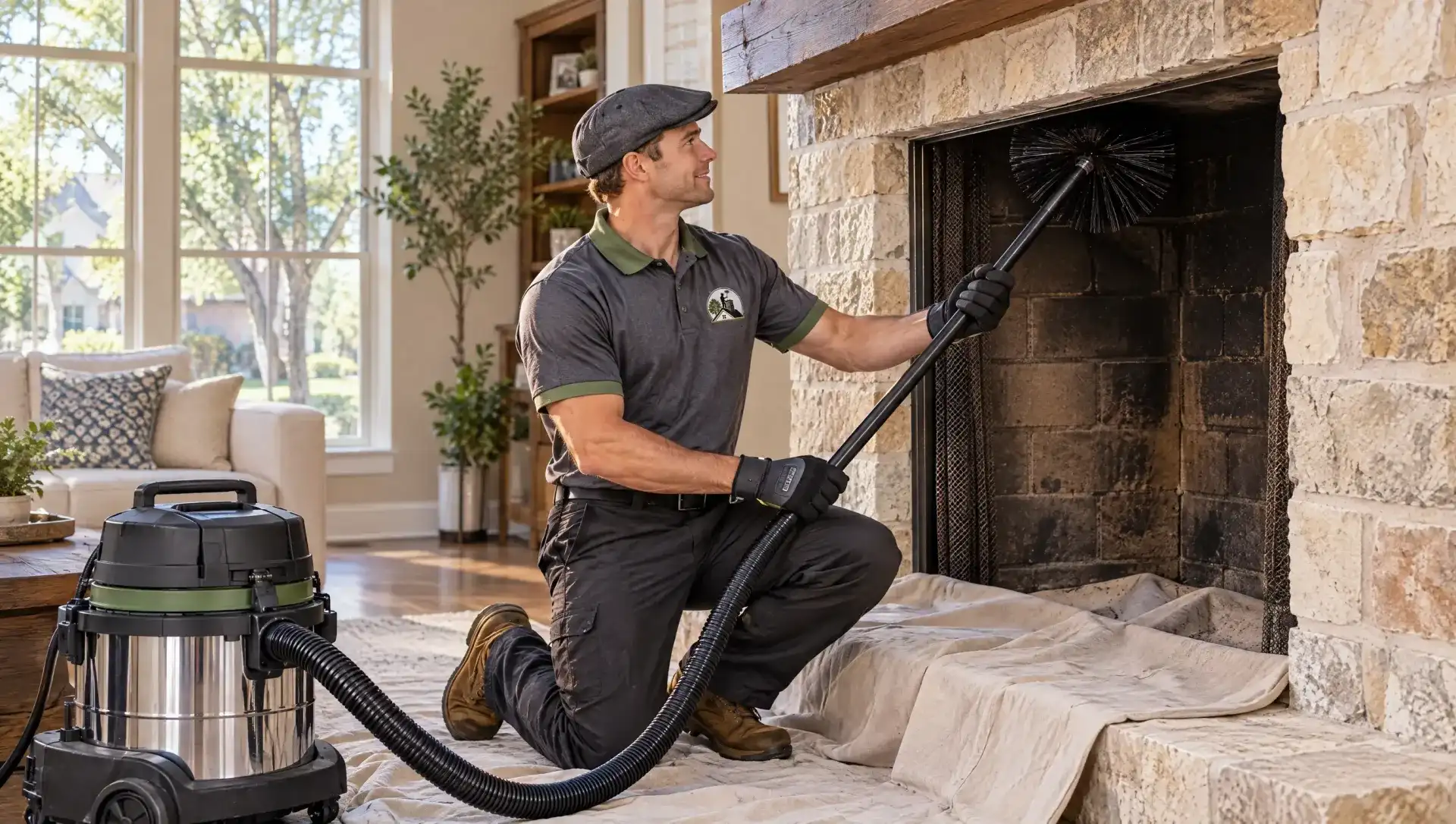
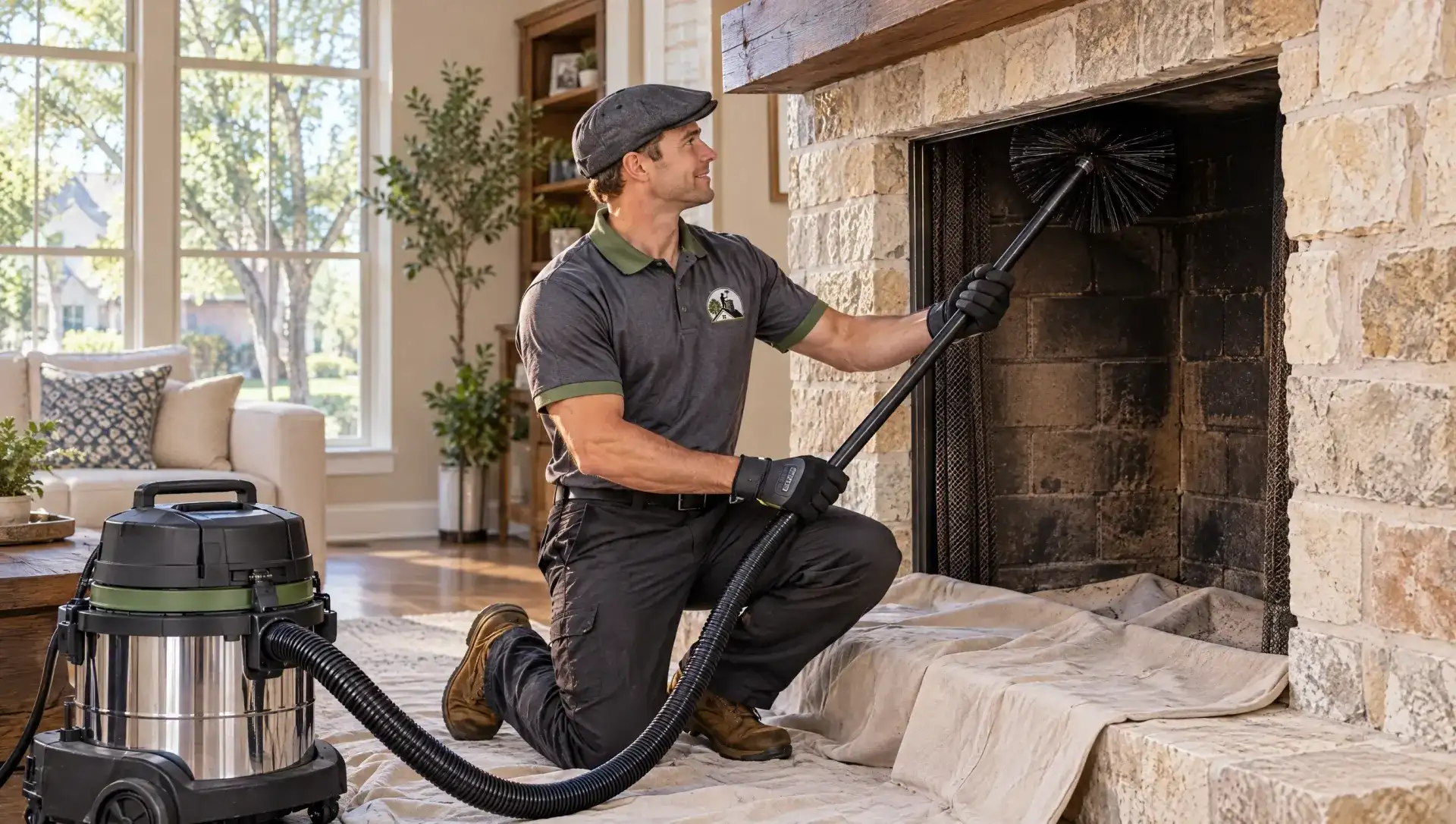
- Have the chimney swept. Removing the creosote and soot removes the source. A sweep also pulls the leaves, nest material and bird droppings off the smoke shelf, which is where most summer odor lives.
- Fix the damper. A throat damper that closes tight cuts the airflow. If yours is rusted or bent, a damper repair or a top-sealing damper mounted at the top of the flue closes the chimney off with a rubber gasket.
- Install a cap. A chimney cap with mesh keeps rain and animals out. Dry soot smells far less than wet soot.
- Use a fireplace plug. An inflatable plug or a fitted foam block set just above the firebox opening stops air from coming down the flue between fires. Take it out before you light a fire.
- Treat the firebox. Vacuum the ash, scrub the firebox walls with a stiff brush, and set an open bowl of baking soda or charcoal on the grate. This covers a little; it does not fix anything above the damper.
- Find the water. If the smell is musty, the chimney is wet. A camera inspection shows where the water comes in.
Air fresheners and chimney deodorant sprays mask the odor for a day. Nothing in a bottle removes creosote.
Is Creosote Smell Harmful?
The smell itself is a nuisance, not a poison. Creosote odor can irritate eyes and throats in people with asthma or allergies, and it clings to furniture and curtains. The real safety point is what the smell means: a flue with enough creosote to smell in summer has enough to feed a chimney fire in winter. The EPA’s Burn Wise best practices list a yearly inspection and burning only dry, seasoned wood as the two habits that keep creosote low in the first place. Carbon monoxide has no smell at all, so a CO alarm on every level matters more than the odor.
Chimney Sweep in Flower Mound for Summer Odors
Flower Mound Chimney Sweep Professionals takes care of a summer fireplace smell with a chimney sweep in Flower Mound that includes a camera check of the flue and a look at the cap, crown and damper from the roof. If the camera finds hard, glazed buildup, creosote removal with rotary tools and a chemical treatment is the next step. A smell with scratching behind it gets chimney animal removal first, then a cap so it does not come back. A damper that will not close gets chimney damper repair so the AC stops pulling chimney air into the room. We lay drop cloths and run a HEPA vacuum the whole time, and you get before-and-after photos and a firm price before we start. Summer is the easiest time of year to get on the schedule. Veteran-owned, on Long Prairie Rd in Flower Mound, open 7 days a week from 7 AM to 8 PM. Call (817) 518-6131.