The Four Places a Chimney Leaks When It Rains
Almost every leaking chimney in Flower Mound comes down to one of four parts. Each one fails in its own way and leaves its own clue.
| Where water gets in | What you see inside | Common cause here |
|---|---|---|
| Crown (the concrete slab on top) | Water stains on the brick near the ceiling, damp smoke chamber | Hail cracks, freeze and thaw, shrinkage cracks |
| Flashing (where the chimney meets the roof) | A ceiling stain a few feet from the chimney, drips in the attic | Lifted step flashing, failed sealant, hail-dented metal |
| Cap or chase cover | Water dripping straight into the firebox, rust streaks on a prefab chimney | Missing cap, rusted galvanized chase cover |
| Brick and mortar joints | Damp brick in the attic, white powder (efflorescence) on the chimney | Porous brick, worn mortar, no water repellent |
The table is a starting point. On a real roof, two of these often fail at once, because the same storm that cracks a crown also dents the flashing.
Cracked Chimney Crown
The crown is the sloped concrete or mortar slab at the top of your chimney. Its job is to shed rain away from the flue and the brick below it. Crowns crack from three things: hail, which Flower Mound gets most springs, the expansion and contraction of a 100°F summer followed by a hard freeze, and plain shrinkage when the original builder poured the crown too thin.
Once a crack opens, rain runs through the crown into the masonry and down the outside of the flue tiles. Inside, you see it as dark stains on the brick above the fireplace or a damp, sour-smelling smoke chamber. A hairline crack can be sealed with a flexible crown coating. A crown that has split into pieces, or one built from mortar instead of concrete, usually needs a new pour. Our chimney crown repair page explains both fixes and when each one makes sense.
Failed Chimney Flashing Where the Chimney Meets the Roof
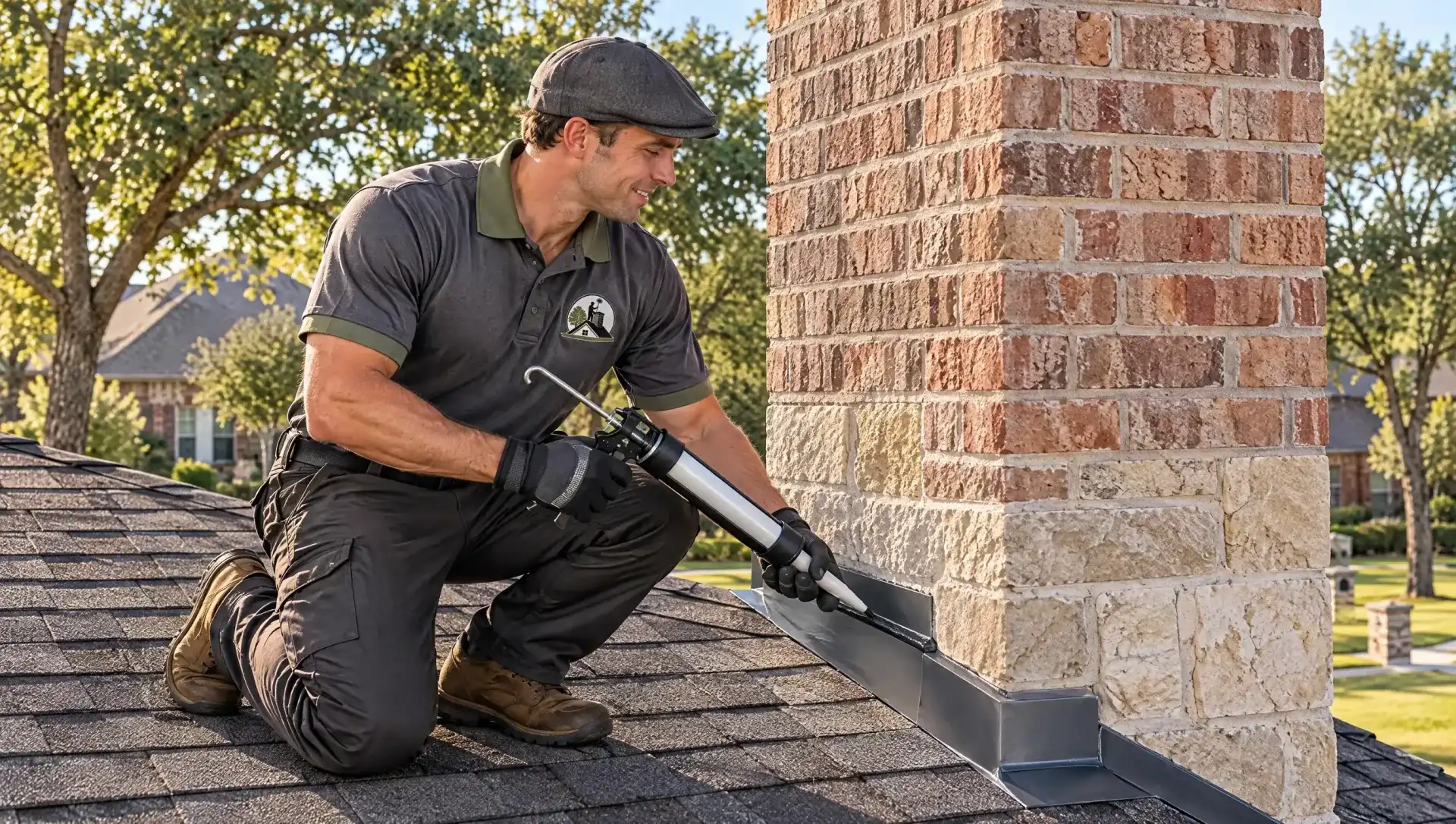
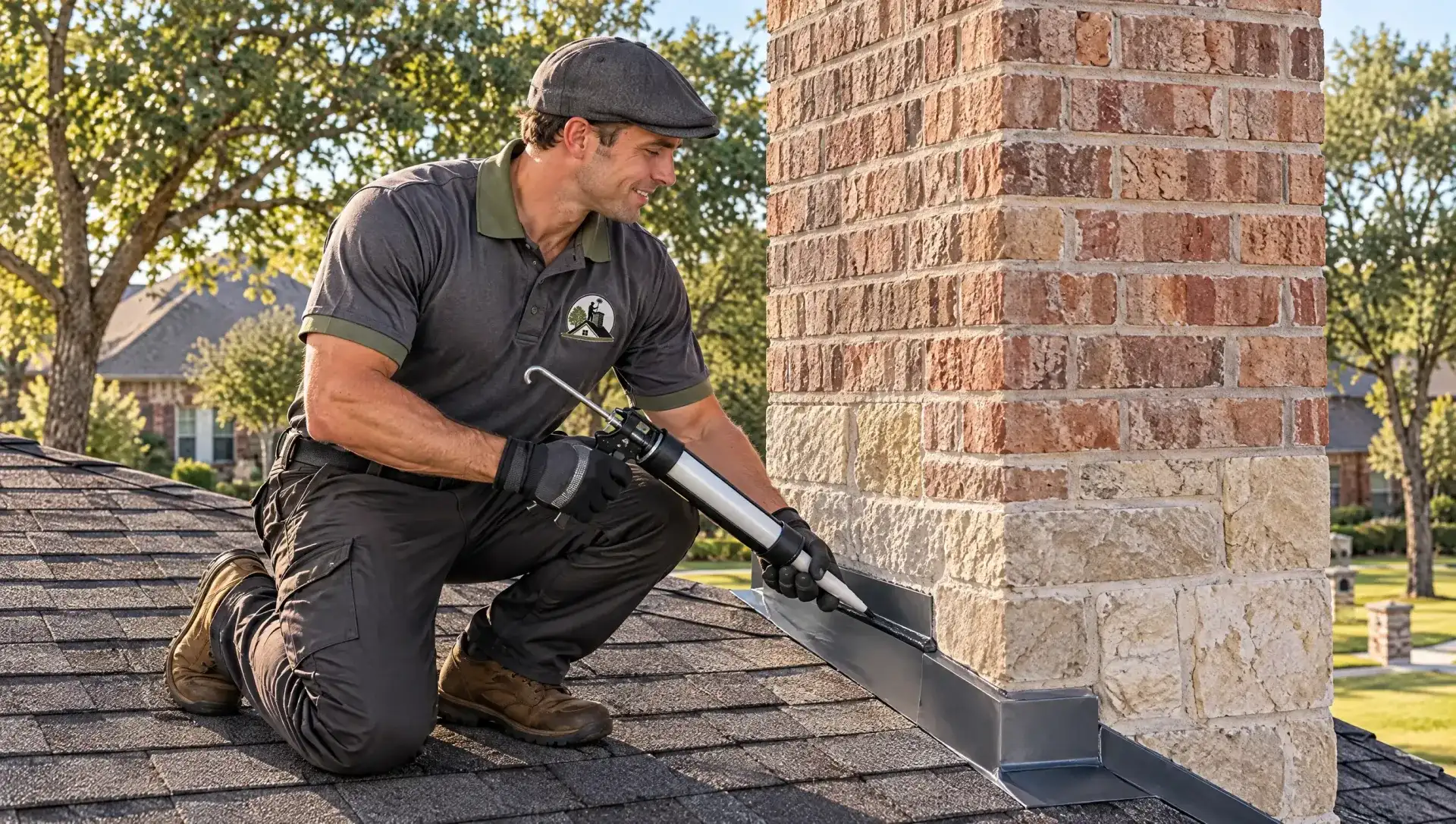
Flashing is the two-layer metal seal between the chimney and the roof deck. Step flashing tucks under each row of shingles, and counter flashing is set into the mortar joints and bends down over it. When either layer lifts, rusts or loses its sealant, rain runs under the shingles and into the attic.
Flashing leaks are the most misread leak in Flower Mound. The water lands on the ceiling drywall several feet downhill from the chimney, so homeowners call a roofer first. If a roof repair did not stop the stain, the flashing is the next thing to check. Hail is hard on it too: a storm that dents your gutters also dents the counter flashing and breaks the sealant. Chimney flashing repair means resealing, re-bedding the counter flashing into the mortar, or replacing both layers with new metal.
Missing Chimney Cap or Rusted Chase Cover
If water drips straight down into the firebox during a storm, the top of your chimney is open. A masonry chimney needs a rain cap over each flue. A factory-built fireplace, which is what most Flower Mound homes built after 1990 have, needs a chase cover: a metal pan that covers the whole top of the wood-framed chase, with a cap on the pipe in the middle.
Galvanized chase covers rust through in 15 to 20 years, and the rust streaks down the siding are the giveaway. Water pooling on a flat chase cover finds the seams and drips onto the firebox and the framing around it. A stainless steel chimney cap on a masonry flue, or a stainless, cross-broken chase cover on a prefab chimney, stops that leak and does not rust.
Soaked Brick and Mortar Joints
Brick and mortar are porous. A masonry chimney on the north side of a house near Grapevine Lake or Lake Lewisville can stay shaded and damp for weeks after a wet spring. When the mortar joints wear back and the brick face loses its hard skin, the whole chimney soaks up rain like a sponge and lets it go slowly on the inside.
The clues are white, chalky efflorescence on the brick, spalling (brick faces flaking off) and damp brick in the attic days after the rain stopped. The fix has an order: repoint the worn joints first, then apply a breathable water repellent. Waterproofing done before the joints are repaired just seals water in.
How to Find Where the Water Is Coming In
- Note when it leaks. Only in wind-driven storms points to flashing or brick. Every rain, straight into the firebox, points to the cap or chase cover.
- Look in the attic with a flashlight during or right after rain. Water on the roof deck beside the chimney is flashing. Damp brick with a dry deck is the crown or the masonry.
- Open the damper and look up with a light. Wet, rusty streaks on the flue walls mean water is entering at the top.
- Check the top of your chimney from the ground with binoculars, or from the roof if it is safe. Look for a missing cap, cracks across the crown, rust on the chase cover and lifted flashing.
- Get a camera inspection. A chimney inspection with a flue camera and a roof check finds the source in one visit and gives you photos for a repair estimate or an insurance claim.
The Chimney Safety Institute of America’s homeowner resources explain why a yearly inspection catches crown and flashing damage before it reaches the ceiling.
Chimney Leak Repair in Flower Mound
Flower Mound Chimney Sweep Professionals handles chimney leak repair in Flower Mound by finding the source first, not by sealing the stain. Every leak visit includes a camera check of the flue, a roof check of the cap, crown, flashing and chase, and a before-and-after photo report you can hand to your insurance adjuster. Repair estimates are free and in writing, and you get a firm price before any work starts. We are veteran-owned, based on Long Prairie Rd in Flower Mound, and open 7 days a week from 7 AM to 8 PM. Call (817) 518-6131 after the next storm, or before it.